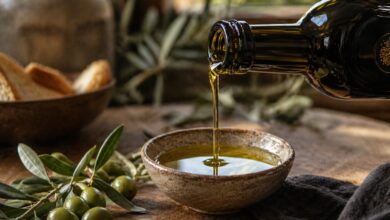
When people talk about olive oil, they often skip the most important part of the story. They go straight to the bottle, the flavor, the use in the kitchen. But none of that begins there. Everything starts much earlier, in the fruit itself.
An olive is not just an olive. It never has been.
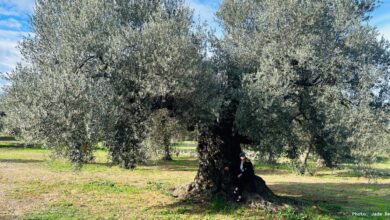
Long before oil existed as something we consume today, there were trees that adapted, evolved, and were chosen again and again by people who saw something in them worth keeping. Over centuries, those choices became varieties. And those varieties became the foundation of everything we now associate with olive oil.
Understanding olive varieties is not about classification. It is about understanding origin.
A world of more than one olive
There are hundreds, possibly thousands, of olive varieties across the world, although only a smaller number are widely cultivated today.
This diversity did not appear by accident. It is the result of geography, climate, and human selection over thousands of years. As olive trees spread across the Mediterranean and later into other parts of the world, each region developed or adopted varieties that responded to its specific conditions.
Some trees learned to survive in dry, rocky soils. Others adapted to milder, more stable climates. Some produced more fruit. Others produced better oil. Over time, these differences became identities. And those identities remained.
What makes one olive variety different from another
At first glance, olives may seem similar. But when you look closer, the differences are structural and meaningful.
Each olive variety carries its own characteristics:
- Fruit size: some olives are large and fleshy, traditionally preferred for eating. Others are smaller and more concentrated, often chosen for olive oil production.
- Oil content: certain varieties naturally contain more oil, while others are better suited as table olives.
- Chemical composition: levels of natural compounds such as polyphenols vary from one variety to another.
- Growth behavior: some trees are resistant and productive, while others are more delicate and demanding.
- Harvest timing: each variety has its own ideal moment of ripeness.
These are not minor variations. They define the nature of the fruit itself.
The most important olive varieties
Although there are many types of olives, a relatively small group dominates global cultivation. These varieties became widespread not only because of tradition, but because they offer reliability, adaptability, and consistency.
Picual
Picual is one of the most prominent olive varieties in the world, especially in Spain. It is known for its durability, high oil yield, and ability to withstand challenging environments. Its trees are resilient, which makes Picual a practical choice for large-scale cultivation.
Arbequina
Arbequina represents a different model. Smaller in size and easier to harvest, it has spread globally because of its adaptability. Its uniform fruit and predictable production have made it especially compatible with modern agricultural systems.
Hojiblanca
Hojiblanca stands out for its versatility. It can be used both for oil and as a table olive, giving it a dual purpose that few varieties achieve as effectively. Its fruit is larger than many oil-focused olives, and its agricultural value comes from that balance.
Frantoio
Frantoio is deeply connected to Italian cultivation. It reflects a more traditional approach, adapting well to different environments while maintaining a strong regional identity. It is appreciated for its consistency and its role in shaping many classic Italian olive oils.
Coratina
Coratina is known for its strength and intensity. It is highly adaptable but less widely cultivated outside its place of origin because harvesting can be more challenging. The fruit is concentrated, expressive, and strongly associated with southern Italy.
Leccino
Leccino is a reliable and widely planted variety, valued for its ability to grow in cooler climates and maintain consistent production. It often plays an important role in cultivation because of its stability and adaptability.
Other olive varieties worth knowing
Focusing only on the most common olives gives an incomplete picture. There is a much broader world of varieties that continue to exist, many of them deeply tied to specific regions.
- Koroneiki: widely grown in Greece and strongly associated with olive oil production.
- Cobrançosa: characteristic of Portugal and valued for its regional identity.
- Kalamata: strongly linked to Greek culinary culture and often used as a table olive.
- Picholine: associated with France and recognized for its distinctive shape.
- Arbosana: originally from Spain and increasingly cultivated in other regions.
- Cornicabra: rooted in Spain and known for its traditional importance.
- Empeltre: another Spanish variety with a long regional history.
- Taggiasca: connected to Liguria in Italy.
- Nocellara del Belice: associated with Sicily and valued both as a table olive and for oil.
- Mission: developed and grown in the United States, especially in California.
Some of these varieties are globally recognized. Others remain local, almost hidden outside their place of origin. But all of them represent a relationship between land and cultivation that has been preserved over time.
Olive varieties and olive oil identity
Even when this article focuses only on olive varieties, it is impossible to ignore one essential truth: the variety of the olive helps shape the identity of the oil that comes from it. Picual, Arbequina, Hojiblanca, Frantoio, Coratina, and Leccino do not simply produce different fruits. They create different possibilities.
Some varieties are chosen because they are strong. Others because they are gentle. Some because they offer consistency. Others because they carry a regional memory that producers refuse to lose.
This is why the name of an olive variety matters. It is not decorative. It tells us something about the fruit, the tree, the land, and the intention behind cultivation.
More than a system of names
It is easy to approach olive varieties as a list to memorize. Names, origins, characteristics. But that approach misses something essential.
A variety is not just a type of fruit. It is the result of repeated decisions made across generations. Someone chose to plant that tree again instead of another. Someone decided it was worth keeping, worth adapting, worth continuing.
Over time, those decisions shaped entire regions. Landscapes were built around certain varieties. Agricultural systems evolved to support them. Communities grew with them.
So when we speak about olive varieties, we are not just identifying differences. We are recognizing a long continuity of choices that turned a simple fruit into something deeply rooted in culture, land, and identity.
And everything that comes after begins there.