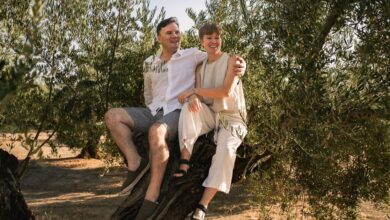
In 2014, when Evelyne Cuadrat Teycheney learned that an olive grove was for sale in L’Albagés, a small village in Catalonia, she could not resist. The land itself was calling her back.
Eighty years earlier, her grandfather Sebastià Cuadrat Realp had left that same region. Fleeing the Spanish Civil War in the 1930s, he abandoned his grandmother Magdalena Sardà Florensa’s olive grove and settled in Bordeaux, where he built a new life far from Catalonia. A family was fractured by history. A legacy was left incomplete.
When Evelyne saw the chance to return, she did not see a business opportunity. She saw an interrupted story waiting to resume.
The family that understands terroir
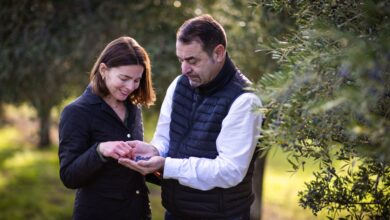
Evelyne did not take this decision alone. She brought her husband Patrick Teycheney and their daughter Caroline into the project. For this family, the return to Catalonia was not about leaving something behind. It was about bringing something with them.
In Bordeaux, Patrick and Caroline had spent decades mastering the art of producing wines from terroir. They managed the family’s vineyard and had acquired three estates in Saint-Emilion, where they worked to develop biodynamic grands crus. They understood that quality could not be manufactured. It had to be born from the land itself.
When they acquired 90 hectares in L’Albagés in 2014, they applied the same philosophy. This was not a return to tradition for the sake of nostalgia. It was the arrival of expertise that had been refined in one of the world’s greatest wine regions, now focused on olive oil.
“For Patrick, Evelyne and Caroline, there is indeed a common denominator between PDO olive oil and PDO Bordeaux wine: quality of the terroir, respect for soil and plants, team spirit to achieve this virtuous mission,” as they themselves describe it.
Josep-Maria’s architecture as a manifesto
Alongside Evelyne stood her cousin Josep-Maria Cuadrat Alventosa, an architect devoted to his birthplace and the Garrigues region. He had spent years restoring the typical dry-stone buildings of the area, structures recognized by UNESCO as intangible heritage. He understood the landscape not as something to conquer, but as something to honor.
When the family decided to build a mill, they entrusted Josep-Maria with a challenge: create a 21st-century facility for olive oil production that would not alter the values of the landscape itself.
The result is radical. The 17-meter-high building is buried in the ground, following the model of the agricultural terraces that have shaped the Garrigues for centuries. From outside, it mimics nature: stone walls, roofs planted with native plants and trees. The reception area emerges at the top of the hill like a landmark, its concrete roof following the soft lines of the natural environment, its glass facade offering panoramic views of the farm and the Montsant and Pyrenean ranges.
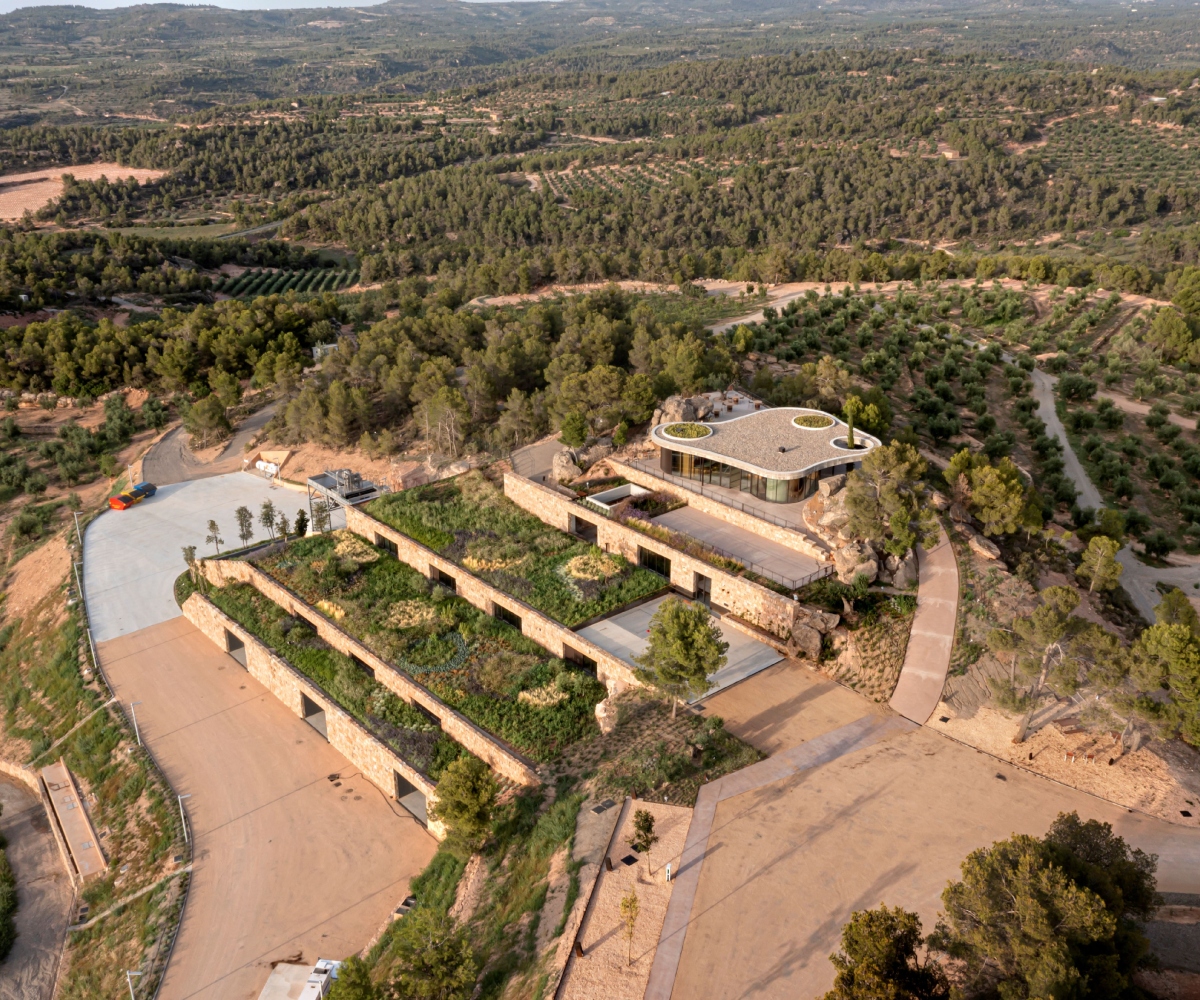
Inside, rock becomes a decorative element. The architecture is not a statement of power. It is a statement of restraint. Of respect.
Josep-Maria’s own words capture this: “I have the same ambition as my cousins: to add value to this land and this village that I love so much. My mission is to help harmonise this project.”
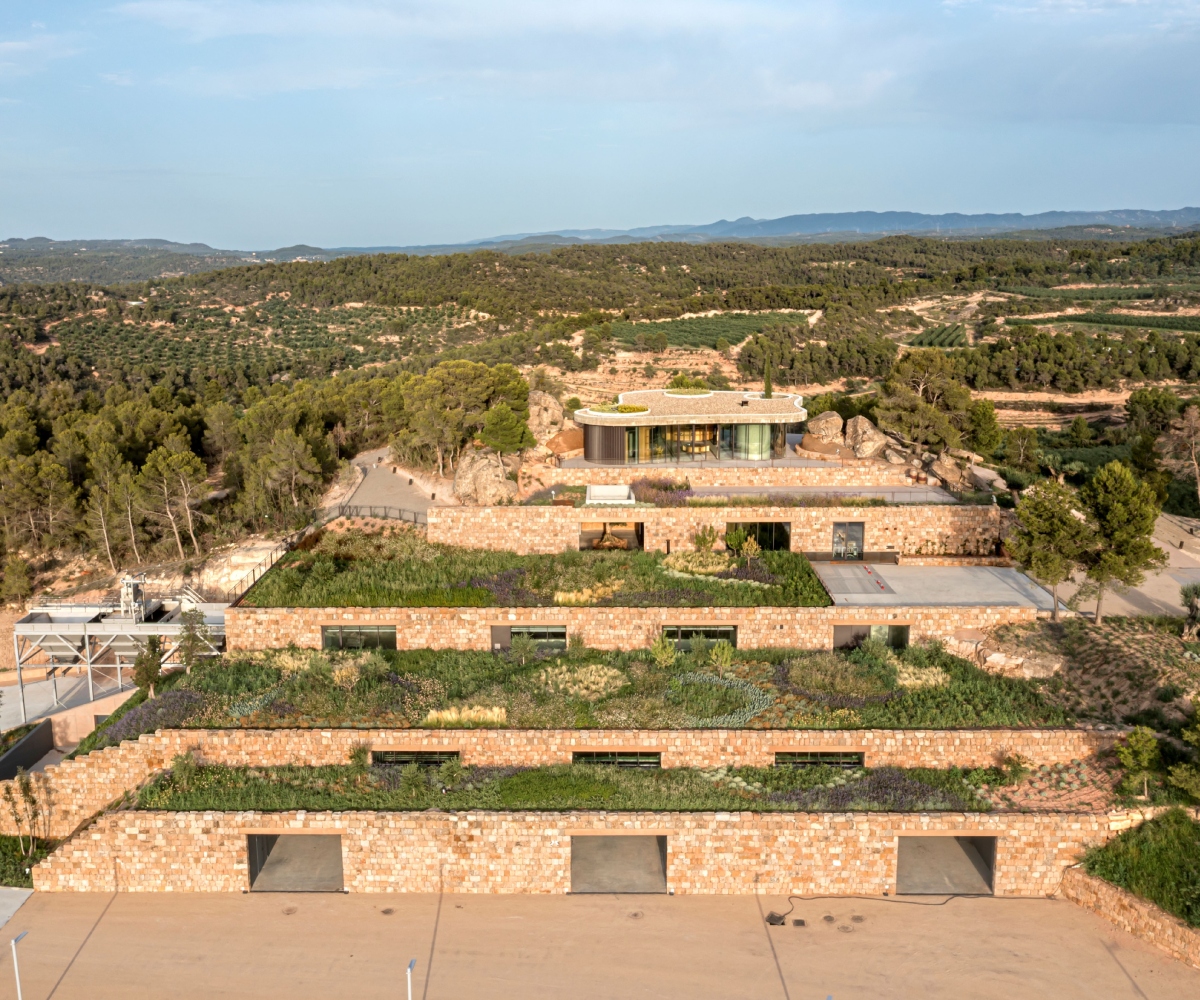
Technology in service of authenticity
The mill that Josep-Maria designed houses one of the most advanced olive oil production systems in the world. But this was never about technology for its own sake.
Ignacio Segura arrived as the olive oil consultant, bringing a 360-degree expertise built over more than two decades. As a tasting master for the Official Jury of Olive Oil of Aragon and president of a group of cooperatives, he had studied under the best Tuscan mill masters and extracted oils awarded with prestigious international prizes in Spain, Morocco and South Africa.
When Ignacio first visited the estate, he said: “I fell under the spell of an iconic project, with features unique in the world. And I saw its full potential of development.”
The mill was designed with no lung hoppers for storing olives, continuous olive cooling technology, machines for de-stoning olives, no headspace mixers, state-of-the-art separators, continuous filtration, elastomer-free pumping at very low speed, temperature-controlled storage, and inert atmosphere packaging. Yet the family’s philosophy remained consistent: “The advanced technology that we use always goes hand in hand with the care, love and passion for the land and production processes.”
Sergi Garcia joined as operations manager, bringing experience from vineyards in the Penedès and technical expertise from Sicily and other regions. He brought the same understanding: technology exists to protect what matters, not to replace it.
The rhythm of the harvest
The olives begin their transformation in October, when the Garrigues take on their first red hues. The Arbequina variety, small and round and pale green, is the star of the region. Legend holds that it was brought from Palestine in the 18th century by the Duke of Medinaceli. It produces one of the best oils in the world.
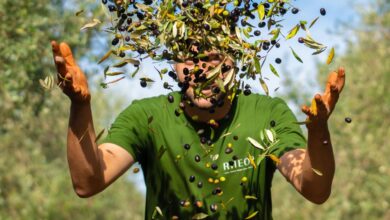
The harvest begins at dawn. The Arbequina is at the height of its greenness and vivacity, where it expresses the most flavor: bitterness, ardor and aroma. Olives are brought to the mill within 30 minutes in stainless steel tanks. Less than one hour separates the harvesting process from cold extraction.
The process unfolds deliberately: leaf removal, washing with pure water, cooling to optimize fruitiness, drying, crushing the whole olives to obtain a homogeneous paste, mixing at low speed and low temperature and in the absence of oxygen. Then centrifugation, stabilization, storage in stainless steel tanks under inert atmosphere kept with nitrogen, and finally, bottling exclusively by clients’ order.
From olive to oil in 10 steps. From harvest to finished product in 24 hours. This is not a race. It is a commitment.
What it took to return
Evelyne’s decision to acquire the olive grove in L’Albagés was not sentimental. It required a family with the expertise to understand terroir, an architect who could imagine a building that belonged to the landscape rather than dominated it, an international consultant who had trained under the world’s best, and an operations team that understood that technology serves tradition, not the reverse.
In 2022, the entire estate committed to organic conversion, targeted for certification in 2024. They implemented a composting system for pomace, the solid residue from crushing, to improve the soil of the plots. They began harvesting during the day to protect native and migratory birds living in the olive groves.
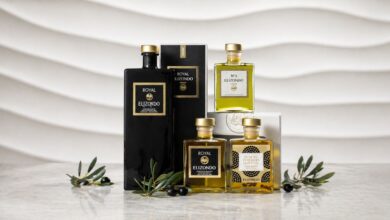
The family created four distinct vintages from the same Arbequina olive: ELIXIR and ELIXIR Dénoyautée from October’s early harvest, and L’OLI and ORGANIC OLI from November’s later harvest. Each carries the designation PDO Les Garrigues, the oldest registered Protected Designation of Origin for extra virgin olive oil in Spain.
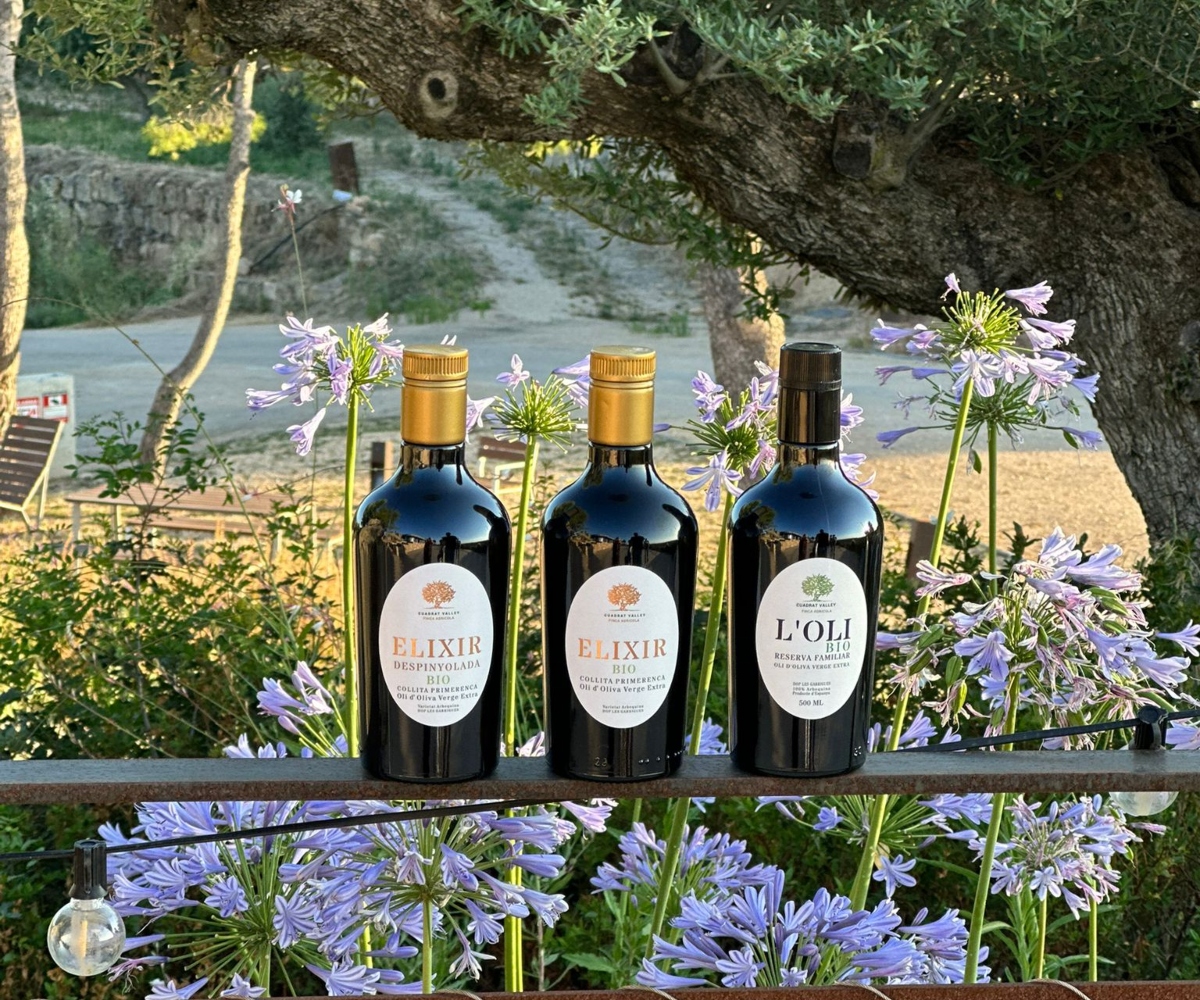
Caroline Teycheney has said: “Taking care of nature is the only way for us to look forward to the future as well as to pass on to future generations the priceless heritage of biodiversity and the beauty of the landscape. It is also a commitment to always offer consumers a product of best quality.”
The story continues
Sebastià Cuadrat Realp never returned to L’Albagés. He built his life in Bordeaux and remained there. But he left behind something more valuable than land. He left his granddaughter with a sense of what was lost, and what might be recovered.
Eighty years after he fled, his family came home. Not to retreat into the past, but to imagine what it might have become if history had allowed it to continue uninterrupted.
Cuadrat Valley is not a return to tradition. It is a family conversation across time: Sebastià’s absence, Evelyne’s return, Patrick’s mastery of terroir, Josep-Maria’s respect for the landscape, and Ignacio’s devotion to excellence all speaking in the same language.
That language is olive oil. But the story it tells is older and larger than any single product.