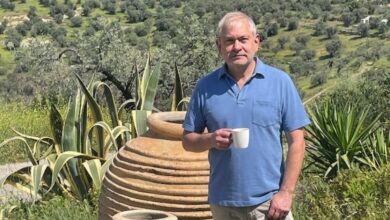
In the early 1990s, Mark Dyer stood in lecture halls at Leeds Beckett University as the institution’s first openly LGBTQ+ student union officer. He marched for equality. He fought to repeal Section 28. He was angry, young, and determined to change the world. By the time he reached his twenties, he had already lived a life of purpose.
Thirty years later, Mark still fights the same battles. But now his weapon is not a placard. It’s a can of olive oil.
The transformation from urban activist to rural farmer seems improbable on its surface. The truth behind it reveals something much more interesting: a man whose values have remained unchanged even as his life has been completely reinvented.
The word “gay” as an act of defiance
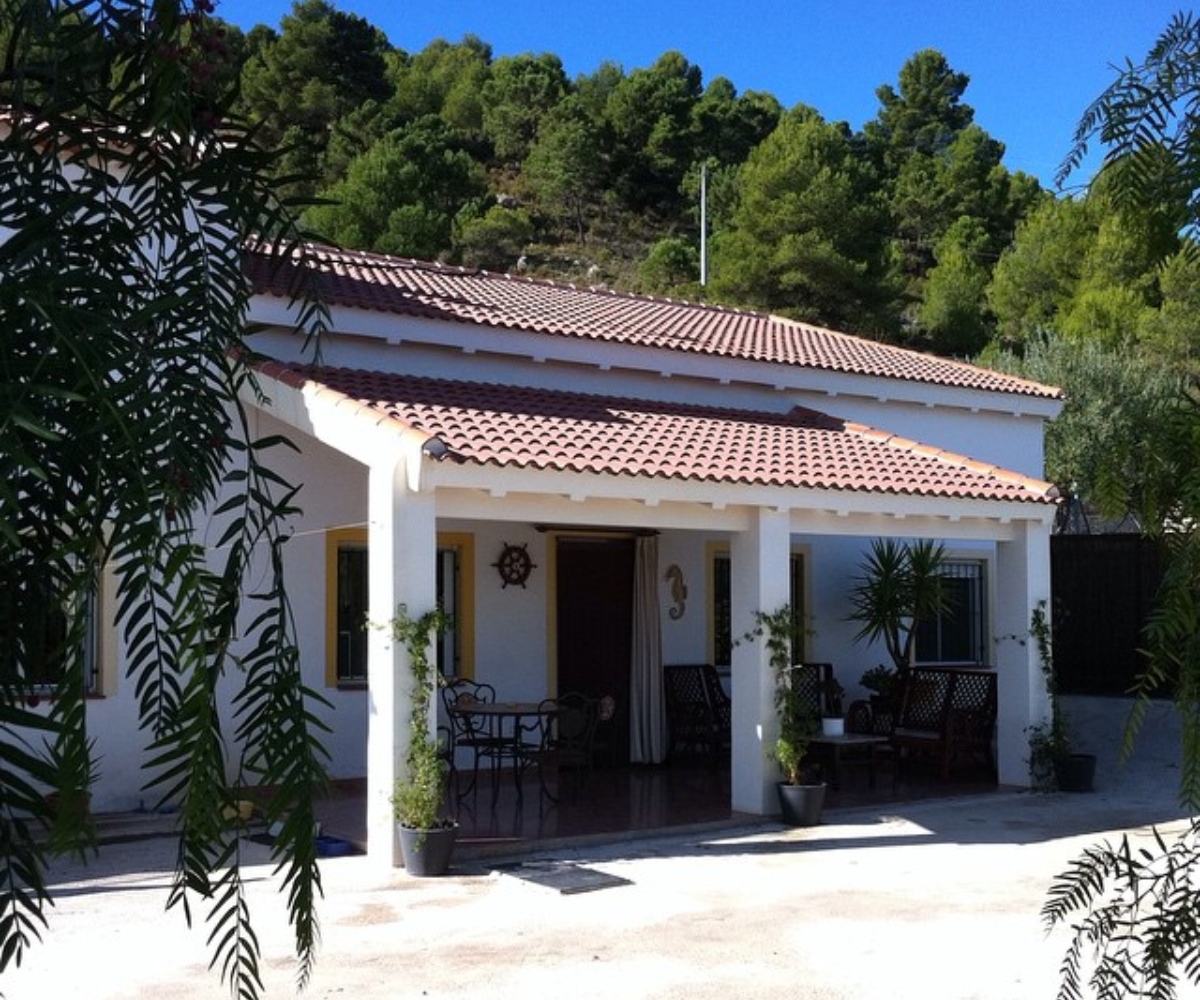
When Mark first harvested olives from his mother’s small farm in Moratalla, Murcia, in 2008, the oil tasted exceptional. He had found something genuine. But the real turning point came not in the harvest, but in a conversation with friends.
They teased him, the way friends do. “So what are you now then, dear? The bloody gay farmer?”
Most people would have laughed it off. Mark did something bolder. He took a joke that could have been a insult and turned it into a brand name. He made a conscious decision to reclaim the word “gay” and put it at the center of his business identity.
This was 2008. This was risky.
“I have never been much of a follower, far more a leader,” Mark later reflected. Using “gay” in the name of his brand was deliberate. It was a refusal to hide. It was the same instinct that had driven him to organize, to protest, to show up in the 1990s when doing so meant something.
The Gay Farmer was born not from market research or branding strategy. It was born from integrity.
Why he left the city
Mark had spent years in the urban centers of LGBTQ+ activism: Manchester in the 1990s, London, then Brighton in the 2000s. He was embedded in community organizing, in the fight for acceptance. The work was meaningful. It was also exhausting.
His childhood had shaped this urgency. He had suffered homophobic bullying. He had learned early that the world was not automatically safe for people like him. That knowledge never left him. It became fuel.
But somewhere along the way, Mark recognized that his activism could take a different form. It didn’t require a megaphone or a city street. It required authenticity and consistency. It required showing up, year after year, and refusing to disappear.
The farm gave him something cities could not: the ability to build something lasting. To tend to it. To make it grow.
The choice to be excellent
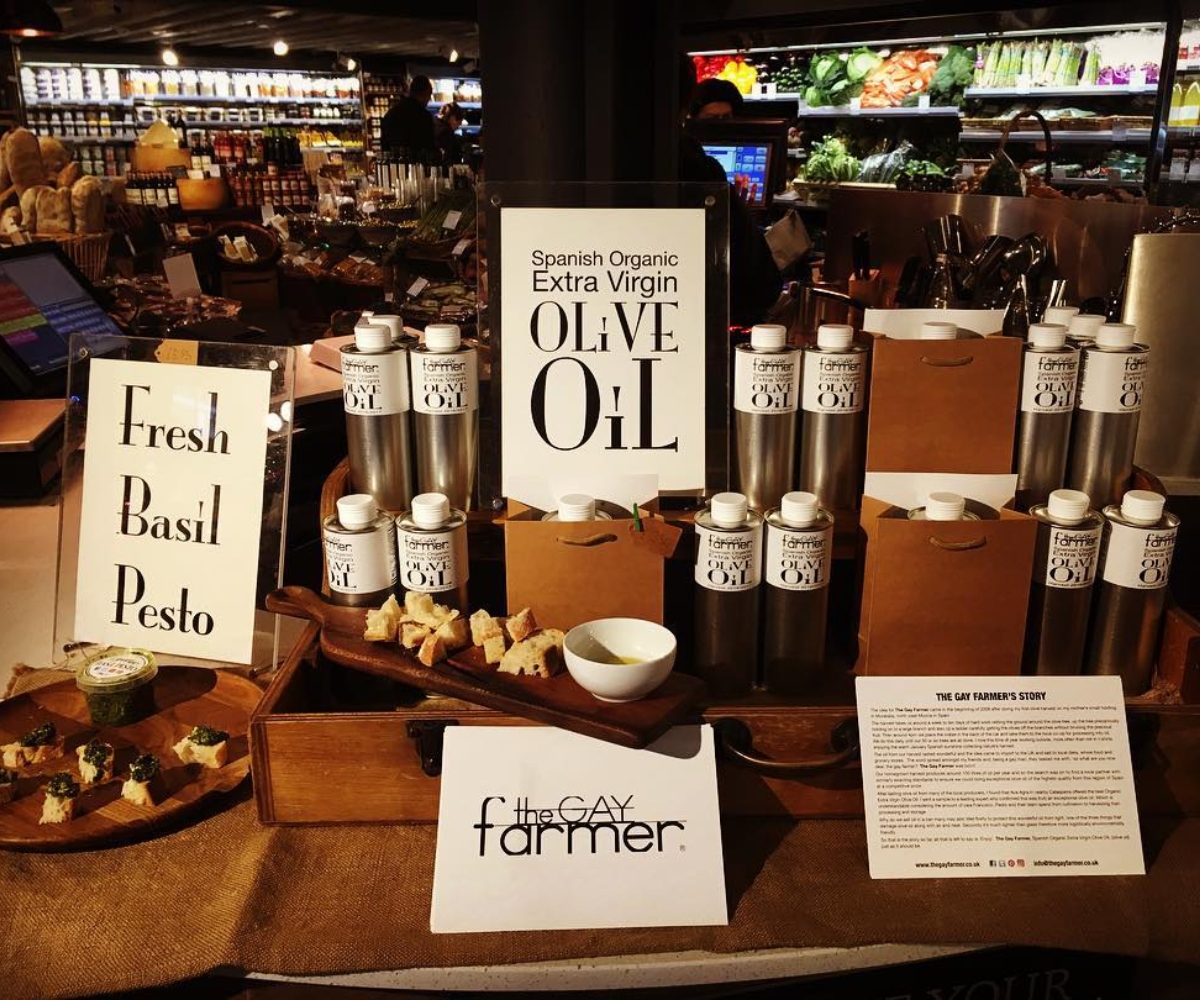
For seven years, Mark worked with a local mill. He learned the craft. He deepened his knowledge of organic farming and olive oil production. But in February 2019, on his birthday, standing at the farm, he made another crucial decision.
He would switch to Cortijo El Tobazo.
This was not a small choice. Cortijo El Tobazo is one of Spain’s oldest family-run organic mills, operating continuously since 1850. Six generations of the same family have produced some of the world’s finest Early Harvest Picual oils. The estate spans 1,500 acres and protects 197 different species of flora and fauna. The olives go from tree to press in less than three hours.
Mark’s willingness to evolve, to seek out excellence rather than settle, reveals something essential about him. He is not interested in good enough. He is interested in the very best, produced with integrity.
This same quality appeared again in 2024, when he completed an intensive sommelier certification through the Olive Oil Times Education Lab. He tasted hundreds of oils. He learned from world experts. He did it not because he needed credentials to sell olive oil, but because he wanted to understand his craft at the deepest level.
The purpose that connects everything
The thread that runs through Mark’s entire life is not about olives or farming or even business. It is about using whatever platform he has to fight for the people who are being harmed.
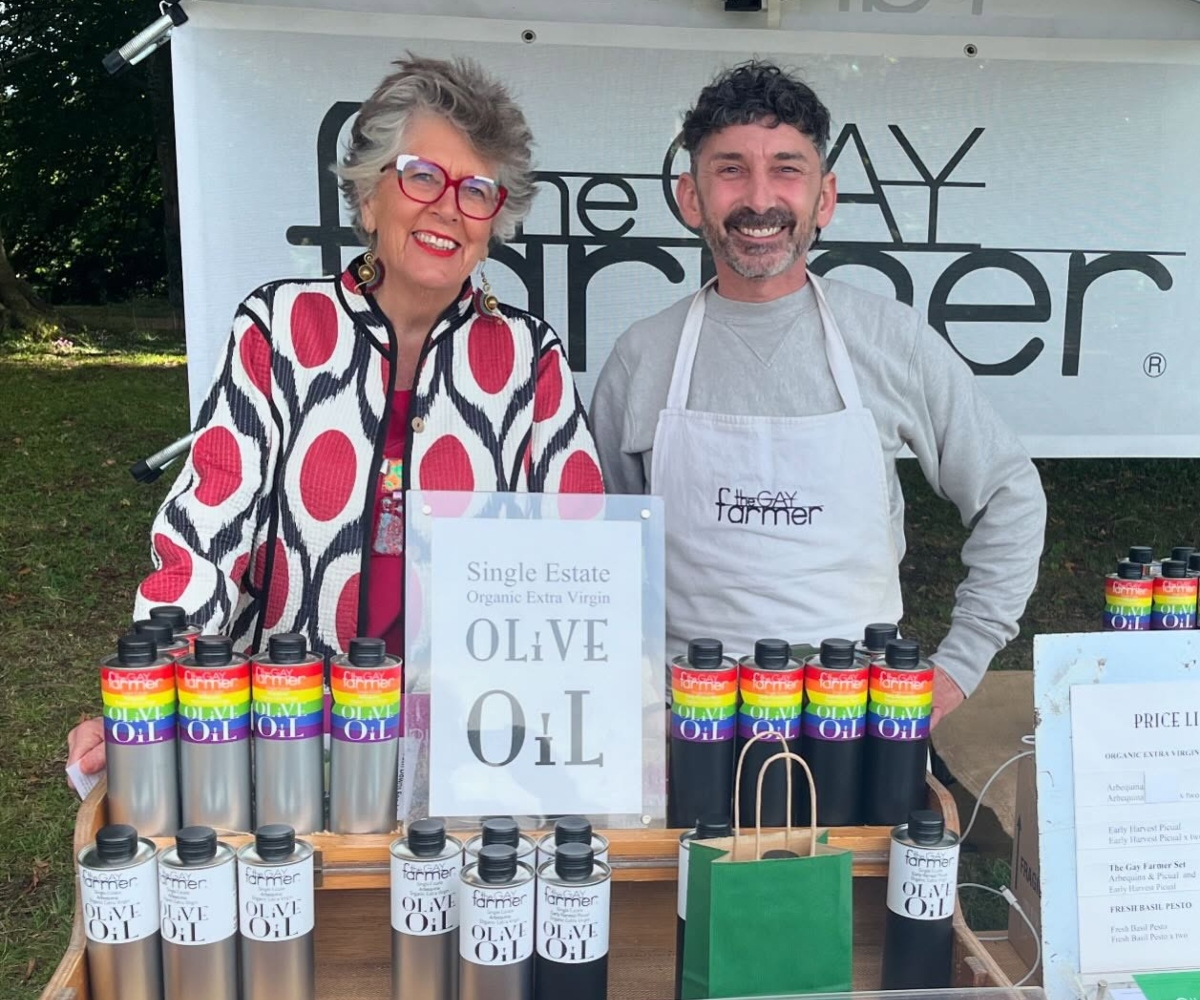
In the 1990s, he organized to repeal legislation that criminalized LGBTQ+ existence. In the 2000s, he raised awareness in the communities where he lived. In 2017, at a market stall in London, he transformed The Gay Farmer into a fundraising hub, raising over £3,000 for Stonewall in a single event. He did this not as a side project. He did this as part of how he operates.
By the end of 2024, Mark had made another evolution. Each can of The Gay Farmer’s queer-branded olive oil now carries a commitment: one pound donated to AKT, a UK charity dedicated to ensuring that LGBTQ+ young people between 16 and 25 facing homelessness have a safe place to live.
This is not marketing. This is continuity.
Mark has never stopped being an activist. He has simply found a way to be one that sustains him, that builds something beautiful in the process, and that allows him to reach people who might never march in a protest but who will buy a can of olive oil and, in doing so, support a young person in crisis.
What Mark understands
Most olive oil brands tell the same story. They claim to be the best. They emphasize terroir and tradition and quality. These things matter. They are not what Mark emphasizes.
Mark emphasizes why he exists. He emphasizes who benefits. He emphasizes that his olive oil was produced by people who respect the earth and refuse to compromise on organic principles. He emphasizes that your purchase matters to someone.
He understood something early that many never grasp: people do not buy products. They buy meaning. They buy alignment with their values. They buy the chance to be part of something that extends beyond themselves.
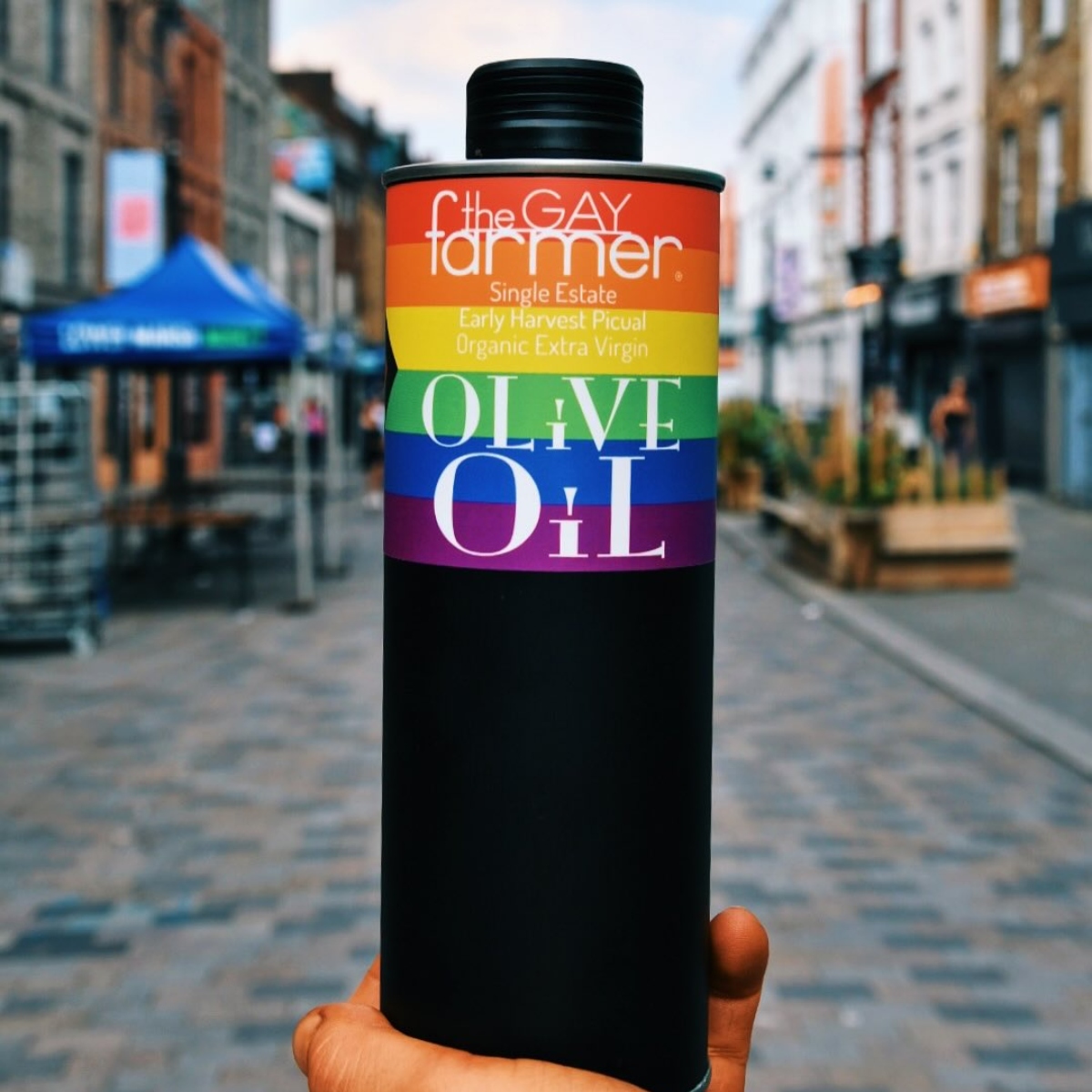
The Gay Farmer brand works not because the olive oil is exceptional, though it is. It works because Mark Dyer is exceptional. Because he has the courage to put his name, his identity, his values at the center of everything he does. Because he refuses to be conventional.
Because he has been fighting homophobia and injustice since the 1990s, and he has no intention of stopping.
He has simply found a new battlefield. One where excellence and activism and business are not contradictions.
One where a can of olive oil can mean something more.