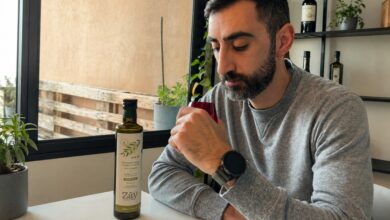
When I first came across Habitat, it was the visible grove health that got me but it was my conversations with Maikel that kept me there. He is deeply passionate and we have that in common. When I started writing this article it was with one thing in mind… I want to honour what they are doing and how they are turning things around in a less than favourable situation. Maikel’s approach to this world is refreshing, not only to my ears but also to the soil and grove he has resuscitated.
There are olive groves in southern Spain where the soil tells a story before you taste the oil, and not in some romantic way, in a very real way. It is actually what people enjoy when learning about where their oil comes from.
You see it in the colour of the earth, you see it in the plants growing and thriving between the rows, and you see it in the insects moving through the cover crops and in the sheep grazing beneath the trees. Most importantly, you see it in what is no longer there: bare ground, hard, compacted soil, and the signs of a landscape slowly losing its ability to sustain itself from generations of just giving and not receiving what it needs. When I first spoke with Maikel, founder of Octubre 6 HABITAT, I expected our conversation to revolve around olive oil. Instead, we spent time talking about soil, which felt entirely appropriate given the story he had to tell and my studies and understanding in regenerative farming (actual regenerative farming and not just word salad!)
For Maikel, olive oil was never the starting point. He inherited the family estate in one of Spain’s most challenging agricultural regions, an area increasingly threatened by drought, extreme heat, and desertification. Like many people who grow up around olive trees, the grove had always been part of the backdrop of his life, familiar and in some ways taken for granted. It was only when responsibility for the farm became his own that he began to see it differently.
“When you first take charge,” he told me, “you see it as a crop. Something you need to manage. But little by little you realise it’s much more than that.”
What he saw concerned him. The soil was struggling. Years of conventional management had left parts of the farm covered by a hard clay crust that prevented water from infiltrating properly. Rain would arrive, but much of it would run off the surface rather than soaking into the ground. In a region where every drop matters, that was a serious problem. Rather than accepting it as inevitable, Maikel began asking questions. His search for solutions eventually led him towards regenerative agriculture, although he is quick to point out that he never set out with a grand plan to become a regenerative farmer. As he explained, it was never about following a trend; it was about solving a problem that was becoming impossible to ignore.
The changes began gradually. Tillage was reduced and eventually stopped, ground cover was maintained rather than removed, and sheep were introduced to graze between the trees. Organic matter was reintroduced to the soil, while smaller pruning branches were shredded and incorporated back into the grove rather than being treated as waste. Individually, none of these practices sound revolutionary, but together they transformed the farm. The changes he made have compounded.
Today, Octubre 6 HABITAT forms part of a wider regenerative movement through the HABITAT Cooperative, a group of producers working alongside organisations such as ALVelAl to restore degraded landscapes and create agricultural systems that work with nature rather than against it. The philosophy underpinning this work is straightforward: healthy soil creates healthy trees, and healthy trees create exceptional olive oil.
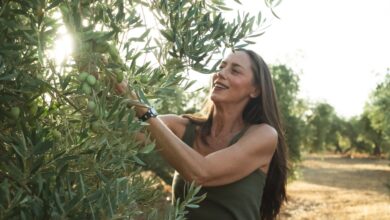
Walking through the groves today the change is visible everywhere. The soil holds moisture more effectively, plant life thrives between the rows, insects have returned, and organic matter is steadily increasing. The landscape feels alive in a way that reflects the health of the ecosystem under the surface.
This challenges one of the biggest misconceptions about agriculture. For decades, many farmers were taught that a clean farm was a healthy farm, and bare earth between trees was often seen as evidence of good management. Maikel believes the opposite. In his view, a healthy farm is one filled with life, movement, and diversity. Grass, animals, plant debris, and insects are not signs of neglect; they are signs that the ecosystem is functioning as it should.
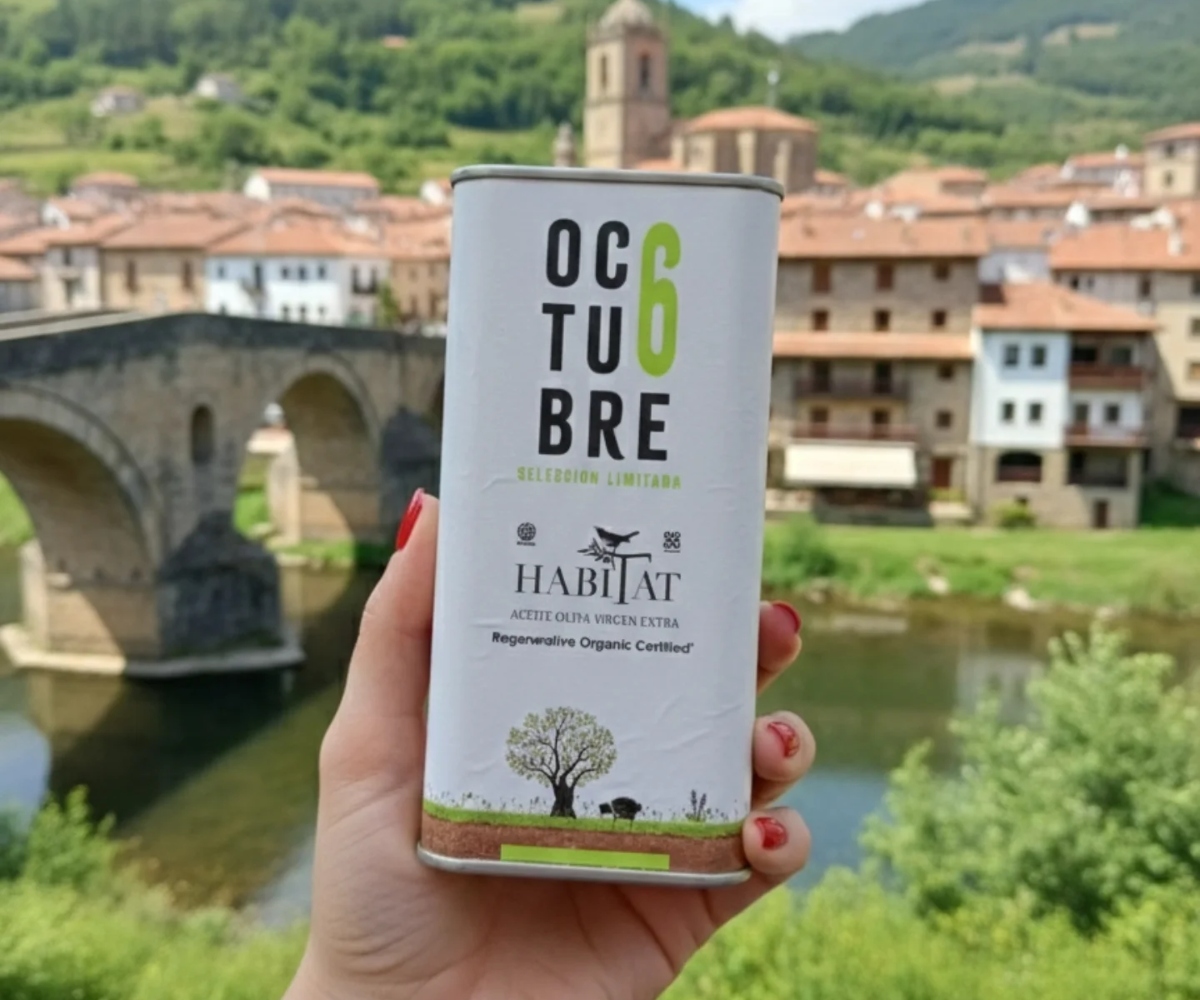
That philosophy extends directly into the bottle. For him, quality begins long before the harvest. Milling technology matters, harvest timing matters, and storage matters, but if the olives do not come from a thriving ecosystem, something fundamental has already been lost.
“Quality isn’t simply the absence of defects,” he explained. “That’s the minimum.”
A truly great extra virgin olive oil should have freshness, personality, and balance. It should communicate something meaningful about the place it came from and the conditions under which it was produced. Octubre 6 HABITAT in my opinion goes beyond that.
That commitment to quality is already gaining international recognition. Octubre 6 received a Platinum Award at the London International Olive Oil Competitions, one of several awards recognising the quality of its early harvest Picual. (londonoliveoil.com) This is only one of three awards recognising HABITAT’s quality this year.
Yet when speaking with Maikel, awards feel secondary. What excites him most is seeing evidence that the land is recovering. He talks about the colour of the leaves, the behaviour of the trees after rainfall, the increase in organic matter, and the return of biodiversity. These are the indicators that matter most because they demonstrate that the farm is becoming more resilient in the face of a changing climate. The decision was not without criticism. When Maikel began abandoning conventional practices such as tilling and leaving the soil bare, many neighbouring farmers questioned what he was doing. In a region where generations have farmed in much the same way, breaking with tradition can be difficult, but he continued and as he puts it, once you’ve witnessed the soil come back to life with your own eyes, there is no going back.
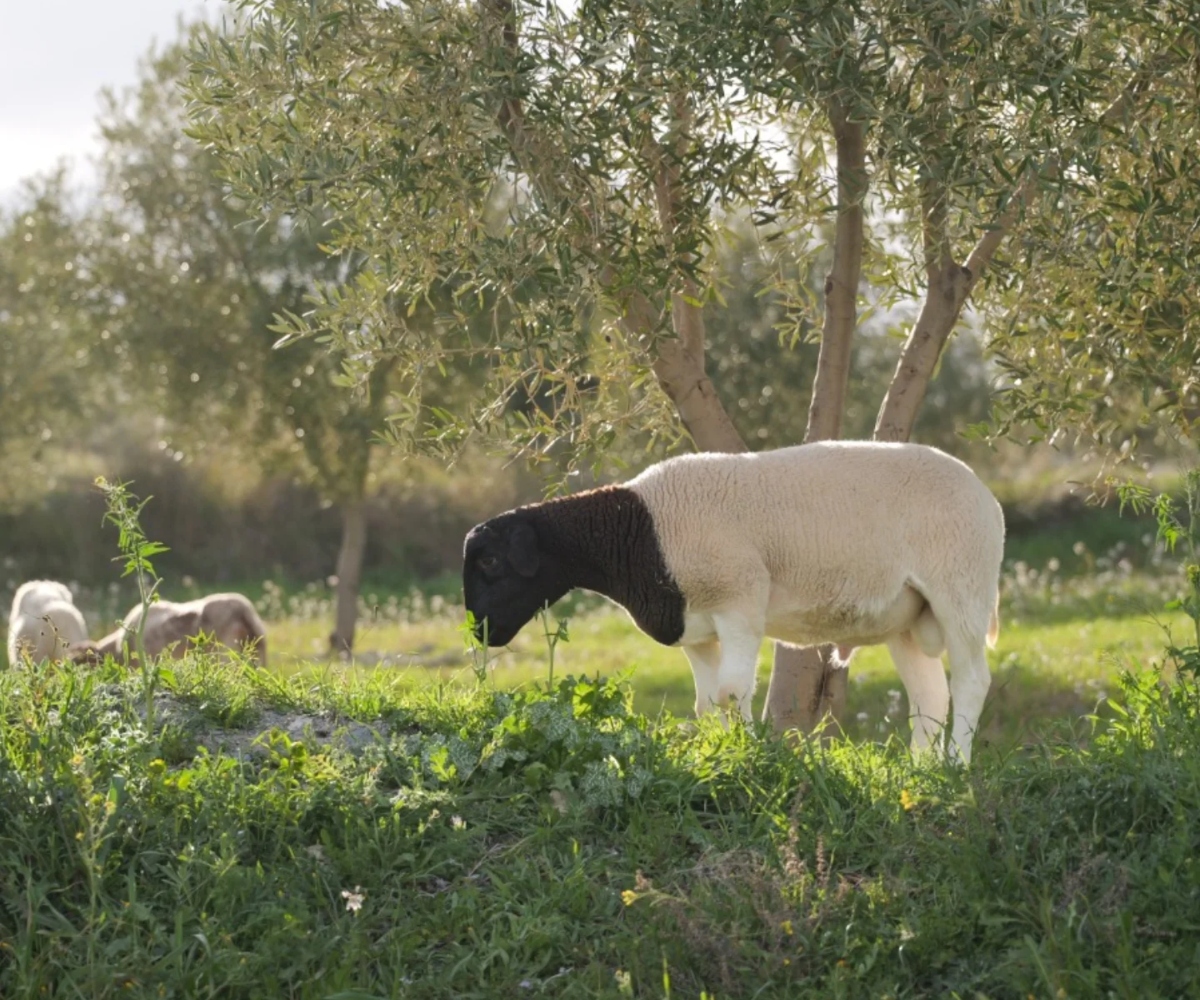
Climate change is not a distant threat here; it is already shaping everyday decisions. Rainfall is becoming less predictable, heatwaves are becoming more intense, and water is becoming increasingly precious. In response, HABITAT’s strategy remains remarkably straightforward. The focus is on improving the soil, continuing to increasing organic matter, keeping the ground covered, recycling nutrients back into the system, and making every drop of rainfall count.
“We can’t make it rain more,” Maikel said. “But we can make better use of the water that falls.”
That sentence stayed with me long after our conversation ended because it captures something essential about regenerative agriculture. It is not about controlling nature but about working with it more intelligently and more respectfully.
In the olive oil world, we spend a great deal of time discussing varieties, polyphenols, harvest dates, and sensory profiles. These matter, but they can sometimes distract us from a more fundamental truth. Olive oil begins in the soil. Not in the mill and not in the bottle. Everything starts with the health of the land. When I asked Maikel what he hopes people feel when they taste Octubre 6 HABITAT for the first time, his answer reflected everything we had discussed. He hopes they taste something real, something with character, and something deeply connected to a particular landscape and a particular way of farming, and I can confirm that when I first tasted Habitat I almost wanted to cry. It is a truly spectacular EXTRA VIRGIN OLIVE OIL.
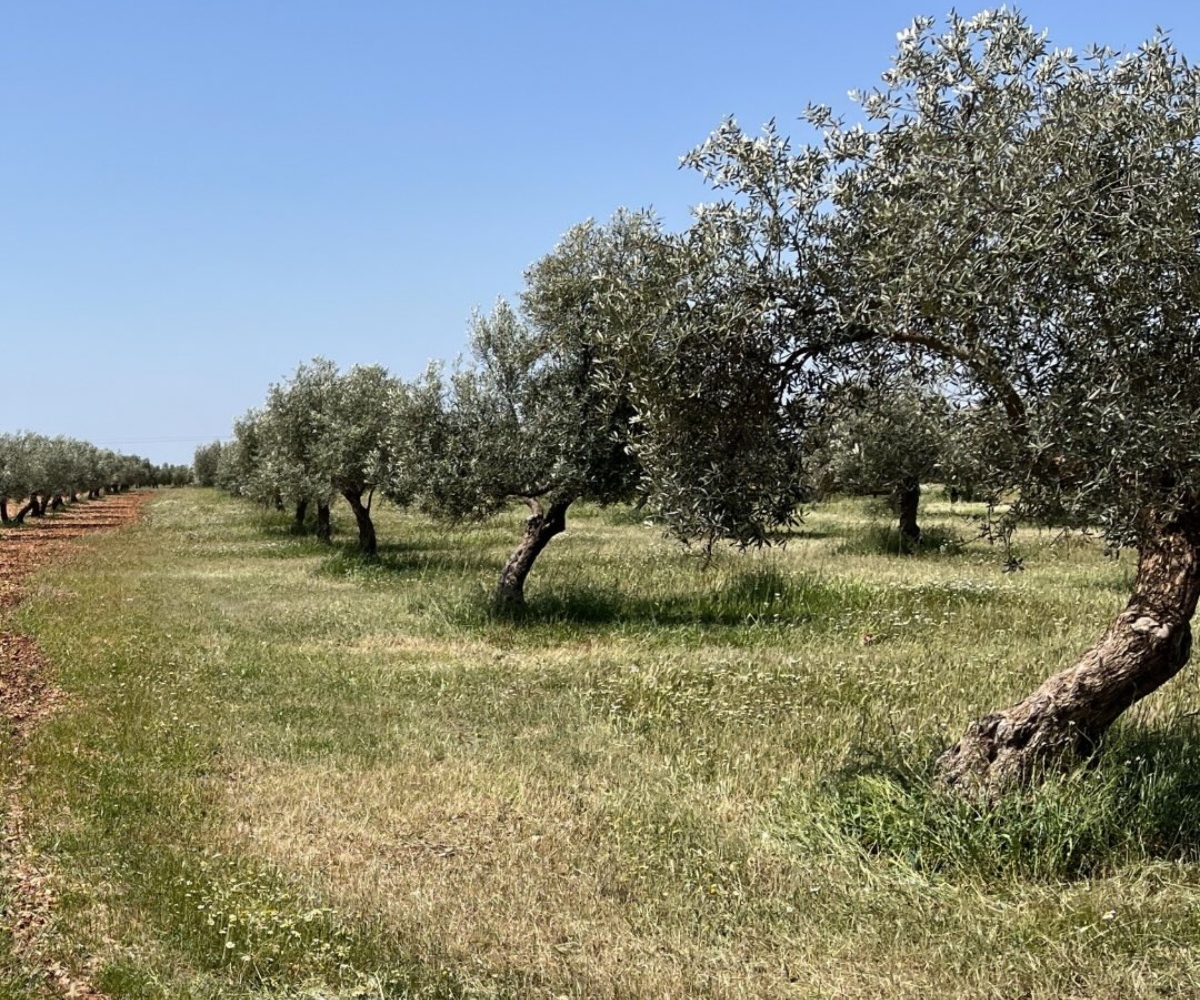
Most of all, he hopes they recognise that behind every bottle lies something much bigger than olive oil itself. It is the story of a landscape being restored, a farming system being reimagined, and a commitment to leave the land in better condition than it was found, and for Maikel, quality is health, flavor, and respect for the land. All three of those together.
That long-term perspective also shapes how Maikel thinks about olive varieties. While some cultivars dominate, he believes many valuable varieties are overlooked, particularly those that have evolved alongside the landscapes they inhabit.
For HABITAT, Picual remains central. Often celebrated for its bold character, Maikel admires it for something deeper: its resilience. In a region facing drought and harsher growing conditions, Picual has repeatedly proven its ability to adapt while still producing oils with structure, intensity and personality, and it is a firm favourite of mine. As climate pressures continue to mount, he believes the olive sector will need to place far greater value on varieties that can thrive with less water and fewer resources. Productivity alone, he argues, can no longer be the only measure of success. Adaptation, quality and ecological suitability will become equally important.
What ultimately drives him through difficult seasons is seeing tangible proof that the work matters, and he sees this on his grove walks. Agriculture is full of uncertainty. Drought, volatile markets and challenging harvests are all part of the reality. Yet when he walks through the grove and sees healthier soil, more biodiversity and stronger trees than he saw a few years ago, it reinforces his belief that the effort is worthwhile. Perhaps most encouraging of all is that he is no longer walking that path alone. What began as a personal conviction has grown into a cooperative movement, bringing together producers who share the belief that olive farming can be both regenerative and economically viable. To me, Maikel is a pioneer of change and I have thoroughly enjoyed our conversation and I hope you did too.
I want to personally thank Maikel for his time and willingness to share his wealth of knowledge with me. It has become something special I will treasure. “Gracias Maikel.“