
When you walk through a grocery aisle or scroll through an online search, and see a bottle of olive oil with an animal on the label, you might think it’s just marketing. A pretty duck. A fierce wolf. A soaring horse. But step closer and you’ll find that these animals tell stories deeper than branding. They whisper about why people chose to make olive oil in the first place. They carry the weight of family legacies, of dreams that took twenty years to realize, of childhood memories and landslides, of prophecies buried in the earth and creatures that refuse to go extinct. In every case, the animal is not decoration. It is a window into why someone woke up one morning and decided that their life’s work would be pouring liquid gold into bottles.
This is a collection of olive oil brands from around the world where animals are not mascots but witnesses. They watch over groves from Spain to Greece to South Africa to Tunisia. They represent the values that guide the hands that tend these trees. They are symbols of resilience, intelligence, protection, fertility, transformation, and memory. They remind us that the best food comes not from factories but from people who see their work as sacred. These are the stories behind seven brands where animals and olive oil have become inseparable.
Cuac AOVE
The rubber duck floating in Cuac’s visual identity carries more than whimsy. It’s a gateway to childhood wonder and the simplicity of nature’s most precious moments. This little duck represents nostalgia, a symbol that lived in the lake of the family’s land, quacking across generations and now swimming into bottles of liquid gold. It embodies the idea that the finest things in life often come wrapped in memories of innocence, authenticity, and the pure joy of moments spent surrounded by nature’s beauty.
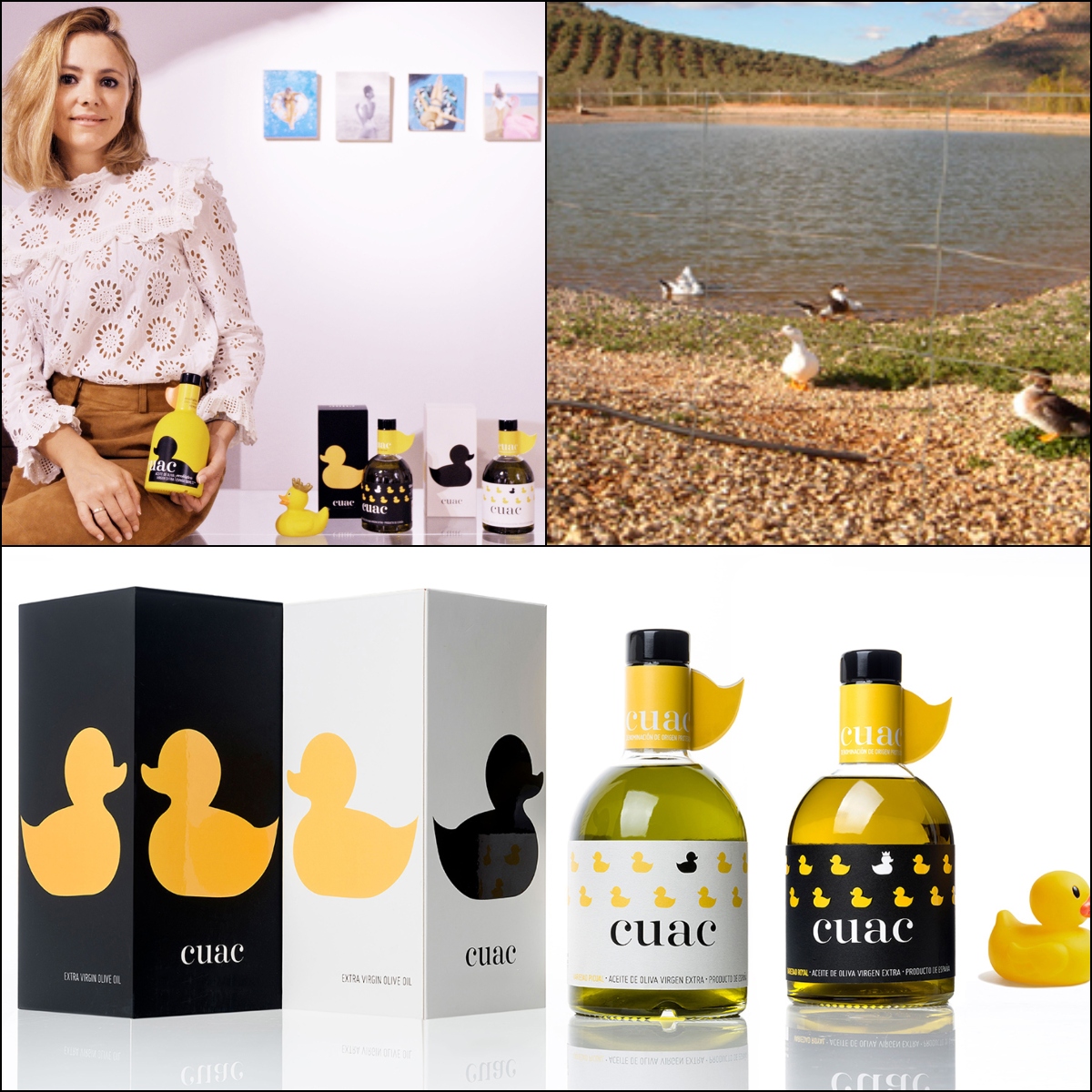
Cuac AOVE is a premium extra virgin olive oil born in the heart of the Sierra de Cazorla National Park in Jaén, Spain. A region with the world’s highest concentration of quality olive groves, it produces exceptional oils from 50-year-old trees using strict protected designation of origin standards. Cuac creates oils through early harvesting and careful processing completed within eight hours of collection. Their portfolio includes the elegant Royal variety with notes of apple and fig, the robust Picual with green tomato aromas, and an organic option for conscious consumers. Each one is a testament to ancestral craft and modern excellence.
Herriza de La Lobilla
The wolf that haunts Herriza’s heritage is not a symbol of danger but of wildness, history, and the untamed spirit of the land. Long ago, wolves roamed the hills of Andalusia, and in one final sighting near an ancient olive grove surrounded by wild acebuches, a she-wolf left her mark on the landscape. That presence became legend, passed down through generations until it named the very earth itself: Herriza de la Lobilla, the land of the wolf. The wolf represents connection to place, to ancestral knowledge, and to the fierce commitment required to craft something truly exceptional from the soil.
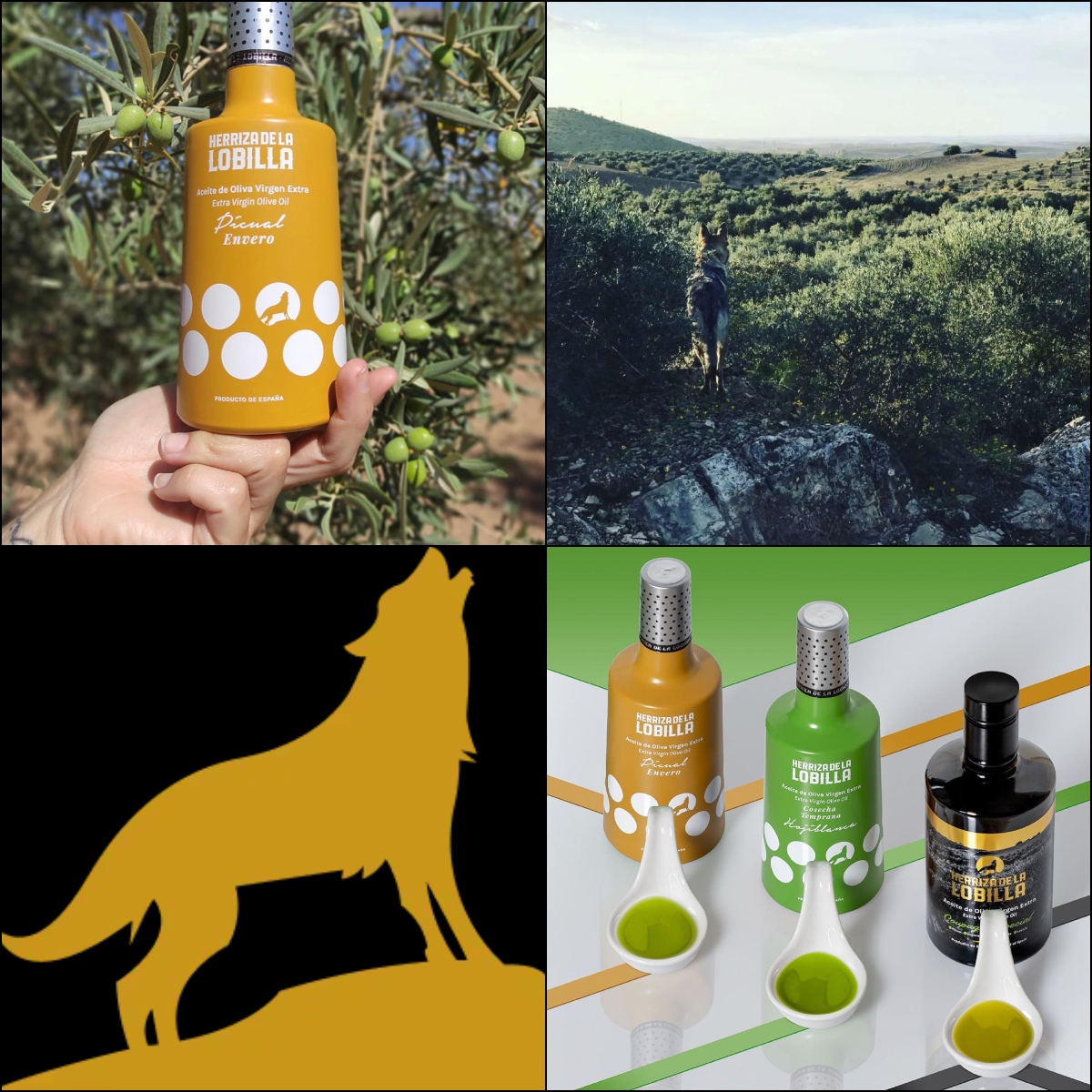
Herriza de la Lobilla is a boutique extra virgin olive oil project born from precision and passion. Launched in 2018 by Álvaro Pallarés and expanded into a micro-winery in Osuna, Seville, this brand obsesses over every detail from harvest timing to molding to selection. Their work speaks through awards: their Lechín & Acebuche coupage earned recognition as Andalusia’s best in 2020, while their 100% Hojiblanca early harvest line has garnered gold medals internationally. Each bottle is a statement of sensory excellence, crafted for those who understand that great olive oil is not just a product but an expression of place, skill, and uncompromising vision.
Styliana/Amazona
The horse in Amazona’s identity is not merely decoration. It represents freedom, strength, and the spirit of a young woman riding through ancient groves, connecting the family’s dream to the land itself. Amazona carries the name of the mythological warriors, powerful and fierce, just like the women who guide this story: Maria, who inspired her family to transform a vision into reality, and young Styliana, who at fifteen gallops through the olive terraces with passion and purpose. The horse symbolizes the bridge between generations, between grandfather’s unrealized dream and granddaughter’s living it daily, between tradition and the energy of youth refusing to let legacy fade.
Styliana is a family story born in Nea Potidea, Halkidiki, Greece, on land inherited from a grandfather who dreamed of making the finest olive oil but never saw it realized. When Georgios returned to that vision with his German wife Maria, they planted 7,000 trees across 90 hectares and, in the midst of the pandemic, launched Amazona, their early harvest organic extra virgin olive oil. With five olive varieties and an obsession with quality over quantity, Amazona has conquered European kitchens, appearing on renowned chef Johann Lafer’s television program and securing German distribution through major gourmet chains. The oil’s high polyphenol content earned it official health benefit recognition. What began as family passion has become international success, yet Georgios and Maria remain focused on the dream: building their own mill, creating a farm where visitors can touch the soil, and proving that some legacies refuse to stay unrealized.
Yapapi
The duck that graces Yapapi’s label is a beautiful act of imagination and hope. In a region where ducks have never been seen, this Greek family decided to draw one anyway, giving form to something they had never witnessed but somehow understood belonged to their story. Ya-papi means simply “for the duck” in Greek, a humble name that whispers possibility and wonder. The duck represents the courage to dream beyond what already exists, to imagine a world where their olive oil could travel further than tradition allowed, and to name that journey with innocent, unexpected beauty. It’s a duck that never existed until they needed it to.
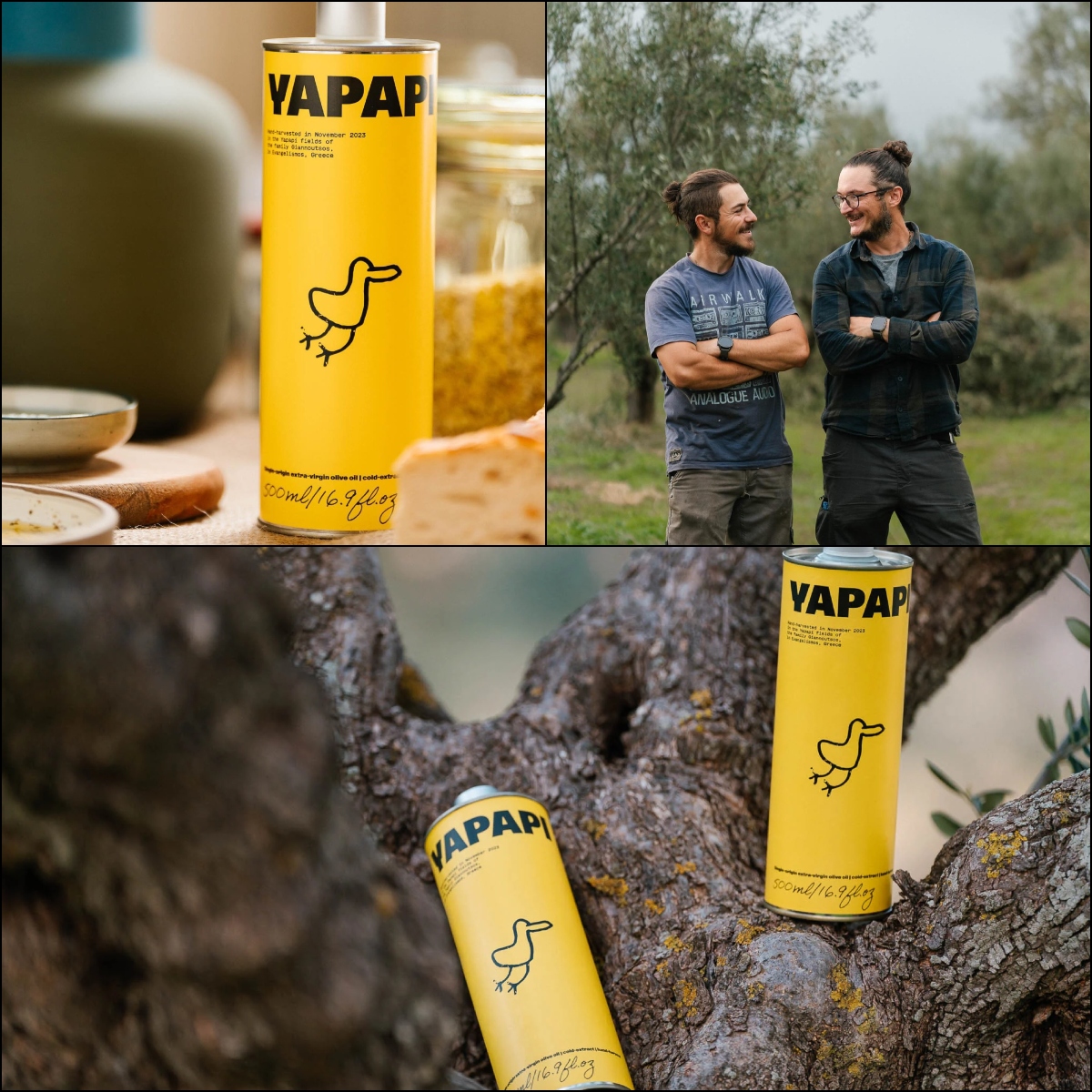
Yapapi is a family operation rooted in generations of olive cultivation near Kalamata, where about 800 trees live like members of the family itself. Harvested by hand, every olive carries the care of people who have always known this work intimately. For years they made exceptional oil, used it themselves, and sold the rest cheaply to distributors, all while dreaming at lunch breaks of sharing their product with the world. That dream found wings when a chance encounter during a European roadtrip connected them with Jerome, a French entrepreneur in Vienna who shared their passion. After harvesting together in November 2023, they realized this story belonged to more than just Greece. Yapapi was born: the same quality oil, the same family care, now traveling the world with a duck that shouldn’t exist leading the way.
Terra Delyssa
When Queen Elyssa’s people began to build Carthage, they unearthed a horse’s head buried in the soil. In Phoenician culture, the horse was a divine omen of strength, prosperity, and conquest. That buried horse became prophecy. Today, Terra Delyssa’s logo crowns the horse with an olive branch as its mane, merging the ancient sign of power with the gift Elyssa brought to North Africa: the cultivation of olives, the transformation of barren land into abundance.
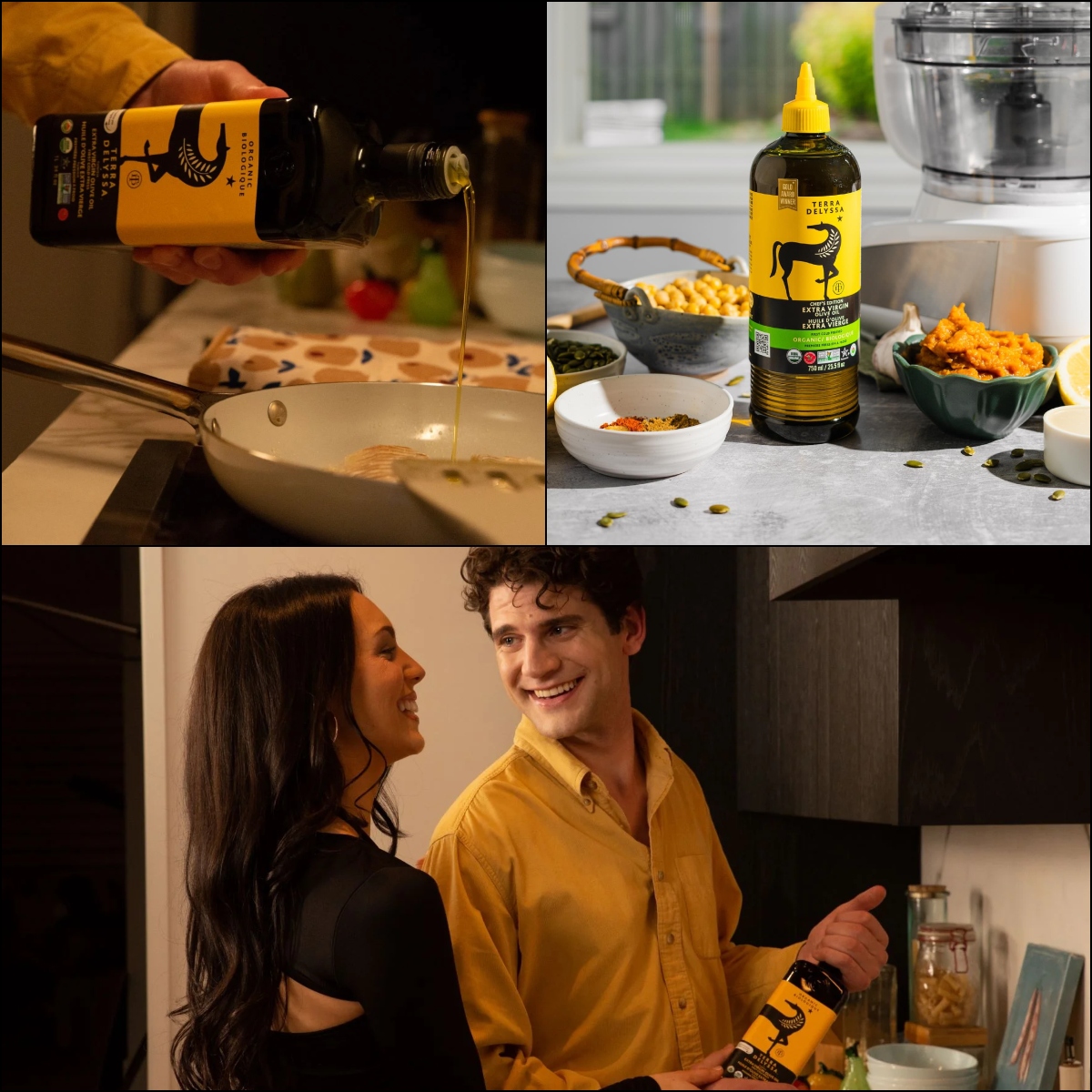
Terra Delyssa continues that legacy in Tunisia, where a family of farmers refused to let their golden oil be diluted and blended away. They created Terra Delyssa as Tunisia’s true ambassador, honoring Elyssa’s vision through rigorous quality standards, sustainable practices, and the planting of over 100,000 trees annually. By naming their oil Terra Delyssa, the Land of Elyssa, they reclaim a heritage born from a woman’s brilliance, a buried horse’s prophecy, and the sacred bond between people and soil.
Nobleza del Sur
The bee arrives with first light, moving from flower to flower, essential and tireless. The butterfly moves through darkness, finding flowers that only open when the sun descends. Two creatures, two times of day, two indicators of the same truth: whether the earth is alive or poisoned. Nobleza del Sur chose these pollinators as the heart of their vision because they speak what soil cannot. Climate change and pesticides push both toward extinction. When you see the bee and the butterfly, you are witnessing a choice about what kind of agriculture we believe in. Both are warnings. Both are promises.
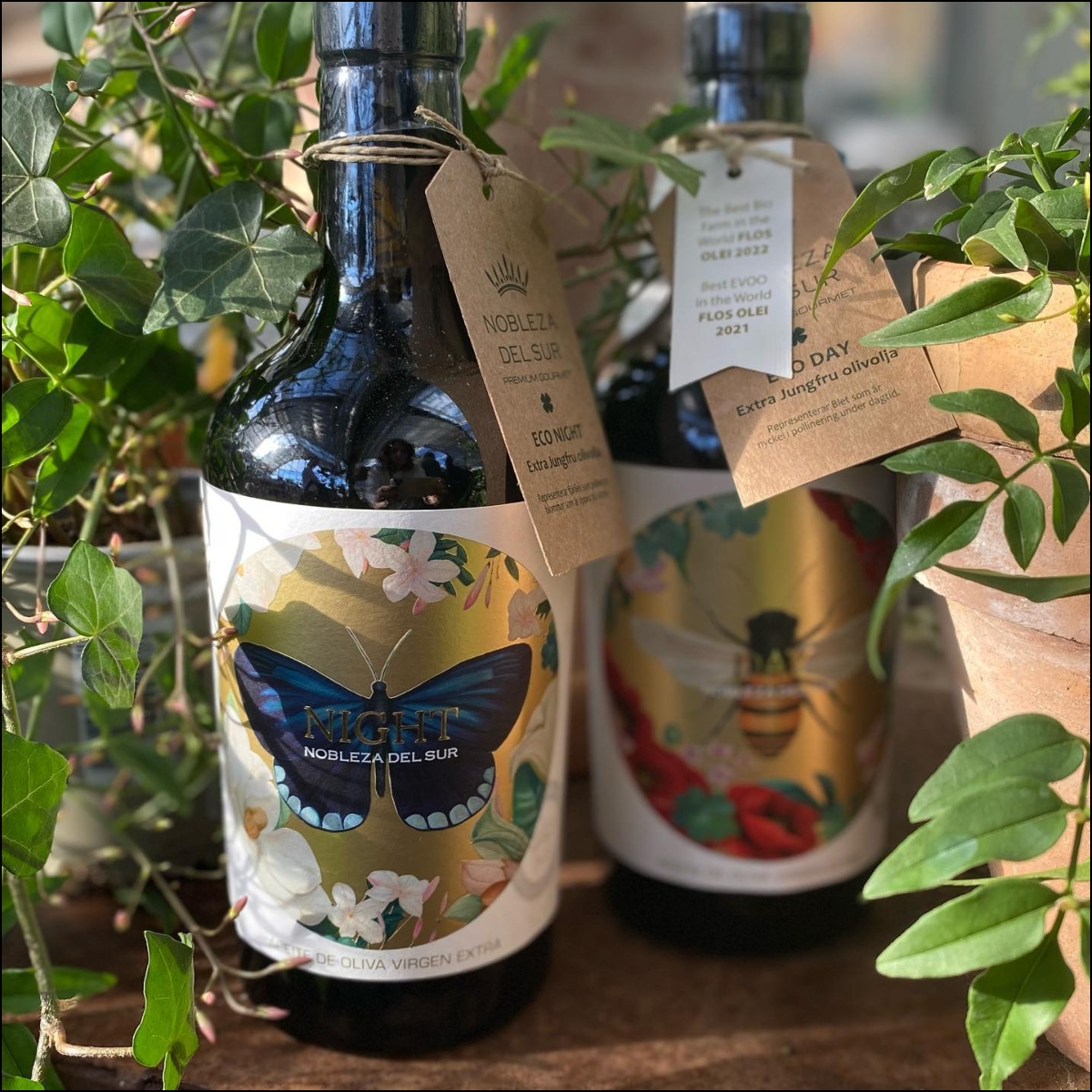
Eco Day is 100% Picual from Finca Vista Alegre, pressed cold within four hours of harvest, its green herbaceous notes echoing banana and apple skin. Eco Night is a plurivariety blend from select groves, fruited and sweet, complex with the aromas of plants growing wild among the olives. Both oils are born from the same commitment: ten to fourteen kilos of olives to make one liter, both extracted in cold, both carrying an acidity of 0.1 degrees. This is Nobleza del Sur’s statement that the health of their fields is measured not in yield but in the return of the creatures that should live there. When the bees and butterflies thrive, so does the oil.
Rio Largo
The fox arrived by accident. When Nick and Brenda bought the estate in 2010 from a Portuguese family, it bore the previous owner’s name: Raposa. In Portuguese, raposa means fox. They had no plans to build a brand, no grand vision of becoming internationally recognized. They simply kept the logo because it was there, because it belonged to the land before they arrived. But there is something honest about that accident. A fox that was never chosen as a symbol but simply inherited, staying because sometimes the best stories are not the ones we plan but the ones that find us. The estate itself is called Rio Largo, Portuguese for wide river, and it borders the Breede, a river wide enough to deserve the name.
Rio Largo sits on 18,000 Italian trees along that wide river in South Africa’s Little Karoo, where Nick, a Master Miller from UC Davis, produces cold-pressed oil that won a Double Gold in 2010, the first ever awarded. What began as a personal decision, a doctor’s advice about olive oil and a farm for sale, became something neither Nick nor Brenda expected: a world-class producer winning awards from New York to Japan to Italy itself. They harvest each cultivar at perfect ripeness, store the oil in innovative decanters that keep it fresh to the last drop, and return more to the soil than they take. The fox was never the reason they succeeded. But it stayed, watching over a wide river, a Portuguese legacy, and two people who simply wanted to share liquid gold.
Hábitat Aove
The thrush hidden in the letter T of Hábitat’s logo is not there by chance. This small bird is deeply connected to olive groves and their ecosystem. It is a messenger of biodiversity. When the thrush sings in an orchard, it means the land is alive. It means the soil breathes. It means the web of life has not been poisoned or abandoned. By embedding this bird into their logo, Hábitat made a simple statement: the goal is not just to produce olive oil. The goal is to create a habitat where creatures like this can thrive. Where biodiversity returns because regeneration has begun. The thrush becomes a measure of success. If the bird stays, the earth is healing.
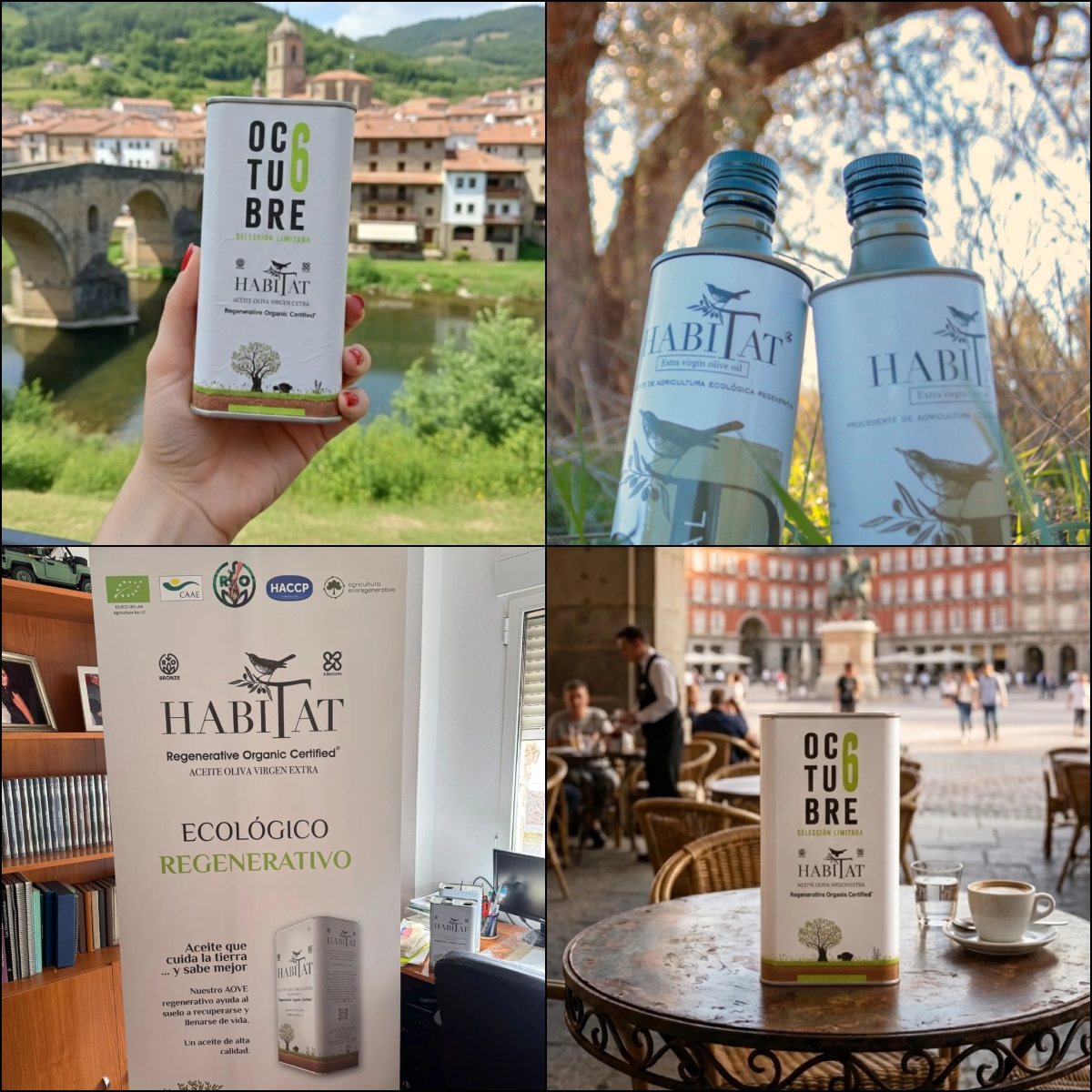
Hábitat AOVE is a cooperative of small farmers born in 2019, driven by the association AlVelAl to execute Europe’s largest ecosystem restoration plan. In the desertified regions of southeastern Andalusia and Murcia, where soil loss reaches 20 tons per hectare annually and populations have dwindled by 14%, these farmers chose regenerative agriculture. They harvest early, practice ecological farming that rebuilds soil health, manage water responsibly, and capture carbon while combating climate change. They receive fair prices. The land receives more than is taken from it. Every bottle of Hábitat oil represents a farmer choosing to save their earth instead of surrendering it, choosing a future that includes thrushes singing again.
There is a pattern that emerges when you look at these stories. It is not accident that each brand chose the animal it did. The duck arrives because of childhood, because of a lake that held meaning. The wolf haunts the hills because once, centuries ago, someone saw it and named a place after the sighting. The horse emerges as prophecy, as the omen of something stronger than one person’s dream. The bee and butterfly return because their absence would mean the earth is poisoned, and their presence means hope. The fox stayed because it was already there, inherited rather than chosen, which sometimes is the most honest kind of belonging.
What these brands share is not just commitment to quality, though they have that in abundance. What they share is an understanding that olive oil is not a commodity. It is a relationship. A relationship between a person and the land they tend, between a family and the legacy they carry forward, between a creature that flies or runs or swims and the soil that must stay alive for both to thrive. The animal on the label is a promise that someone is paying attention. That something small and wild and essential was worth protecting. That profit matters less than the integrity of the work. That when you taste the oil, you are tasting not just flavor but intention. And intention, it turns out, tastes like something the world desperately needs.


KORAJE has a golden butterfly, a symbol of transformation and courage- both of these virtues are apparent in Olive trees and humans.