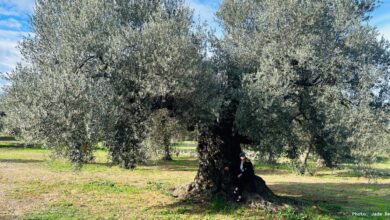
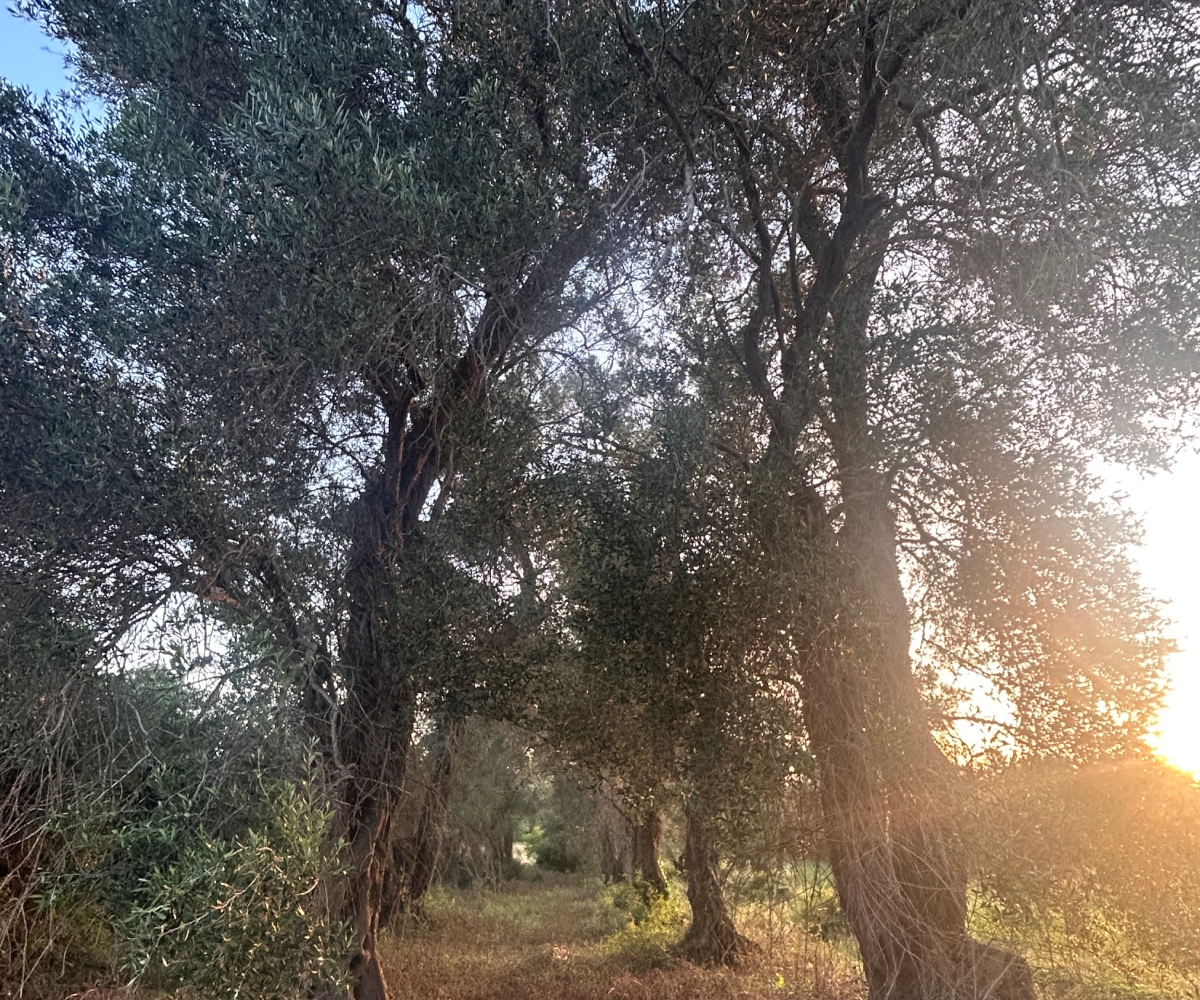
There is a moment while driving across Corfu when you stop thinking about olive groves altogether. It is completely overwhelming. I normally stop when I see a grove and take a quick look, but if I did that here we would never get anywhere. The first thing that interested me was that Corfu doesn’t really feel like an island covered in olive groves. It feels like an island that exists under the olive trees. More than four million of them cover an estimated sixty percent of the arable land, many over three hundred years old. And yet none of that locks in as agriculture. The trees are so large and so deeply embedded in the landscape that they stopped being groves long ago. Their canopies arch over roads, villages and hillsides.
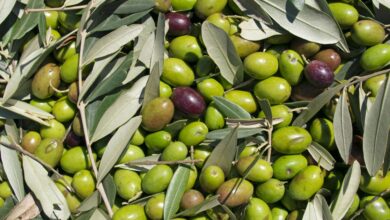
Lianolia, Corfu’s historic and dominant olive variety, has shaped the island’s identity, economy and its hillsides for generations. It is one of the most abundant olive landscapes of the Mediterranean, and it takes a moment to realise you are standing inside it but when you do you can’t help but see these beautiful trees, Lianolia olives, left to their own devices, became giants.
That this same island spent decades producing olive oil considered unremarkable by the wider extra virgin world is one of the ironies in the story of Greek olive oil. Understanding why reveals everything, because in many ways Corfu has it all.
The olive’s relationship with Corfu is inseparable from its Venetian history. During Venetian rule, olive cultivation was actively encouraged across the island and millions of olive trees were planted over the following centuries.They were not motivated by health benefits or gastronomy at all. Olive oil fuelled lamps, generated wealth and formed part of the economy of the Mediterranean. The trees were a strategic resource. Over generations they multiplied, spread and grew until the island became a large living grove.
What Corfu gains in abundance it pays for in practicality. These are not neat, easily managed agricultural units. They are enormous, ancient trees, multi-branched and towering, occupying terrain where machinery has limited reach and where harvesting demands a level of labour and physical commitment that is difficult to appreciate until you stand beneath one of these giants and try to imagine the work involved. Grey-green hills stretch from the coast to the island’s highest peak, the Pantocrator, the slopes almost entirely covered in trees that seem to have grown not by human interference but by their own free will. Wild in many ways thanks to the humidity.
The problem:
Quality olive oil is, above all else, a race against time. The window between harvest and mill is where extra virgin olive oil is either made or lost. Phenolic compounds, the source of that grassy intensity, that peppery finish and the complexity that separates a truly great oil from a good one, begin their slow decline the moment the fruit leaves the tree. In regions where harvest is efficient, producers can move quickly. In Corfu, geography pushes back hard. Standing in certain parts of the island, harvesting seems close to impossible. I still don’t really understand how they do it but I have a few more days to figure this out.
One practical consequence, repeated across generations, was that fruit was often harvested much later than would be considered ideal today. In some cases olives were collected from the ground after falling naturally and lying there for months. Oil was produced, but the oil that rarely expressed what the Lianolia and these particular trees were truly capable of. The reputation that followed attached itself to the island. Corfu oil became shorthand for something ordinary, and the Lianolia, one of Greece’s most distinctive cultivars, was sadly overlooked in conversations about exceptional Greek olive oils.
What has happened over the last two decades deserves to be called a renaissance, though it took remarkable people and a great deal of hard work to get here. By around 2010, an estimated sixty to seventy percent of Corfu’s ancient groves were being abandoned as younger generations left for the Greek mainland. Centenarian trees were being surrendered to neglect, and many still are. But a few things have changed, and the people behind that change are doing incredible things and getting recognition for it. The wheels of change have been in motion for a while now and it’s easy to see it when you visit any of the groves here.
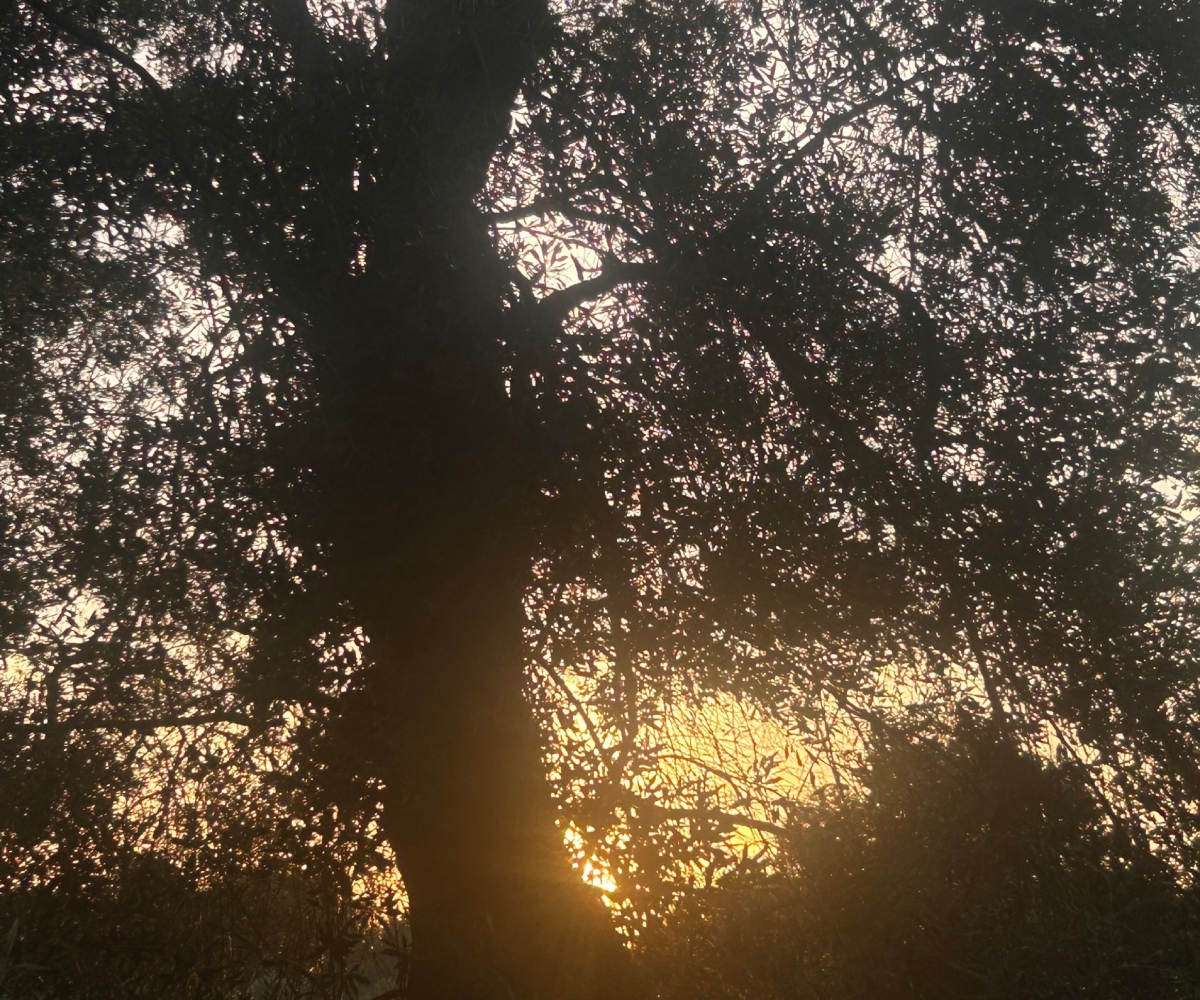
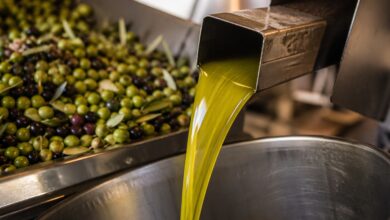
Brothers Spyros and George Dafnis were among them. Rather than inheriting a functioning business, they began with two thousand neglected, unproductive trees and a conviction that the Lianolia was not incapable of greatness. It had just never been given the chance. They created The Governor, named in honour of Count Ioannis Kapodistrias, the Corfiot statesman who became the first governor of independent Greece. Earlier harvesting, meticulous milling at their family mill in the village of Aghios Mathaios, and an uncompromising focus on phenolic quality transformed what five-hundred-year-old trees could produce. I went to their mill tour and tasting and I highly recommend it. I am also reviewing their oil and that’ll be up on my instagram page soon.
Then the story of Dr Kavvadias an orthopaedic surgeon living on the island, Dr Kavvadias held a long-standing conviction that olive oil, produced correctly, could acquire healing medicinal properties. He cultivated his centenarian Lianolia grove using only natural methods and was among the first producers in the world to bottle two rare local varieties, Lianolia and the Ionian Thiako. His farm in the Tzavros region became a pioneer, eventually winning gold quality awards in both New York and Tokyo. Today his grandson Apostolos continues the work under the Dr Kavvadia name, drawing visitors from around the world to the same estate the Doctor first cultivated. I am so excited to visit their grove tomorrow and will do a separate piece on that.
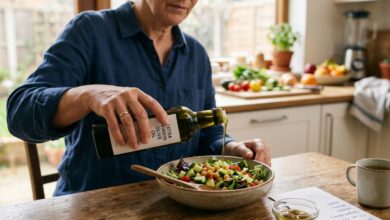
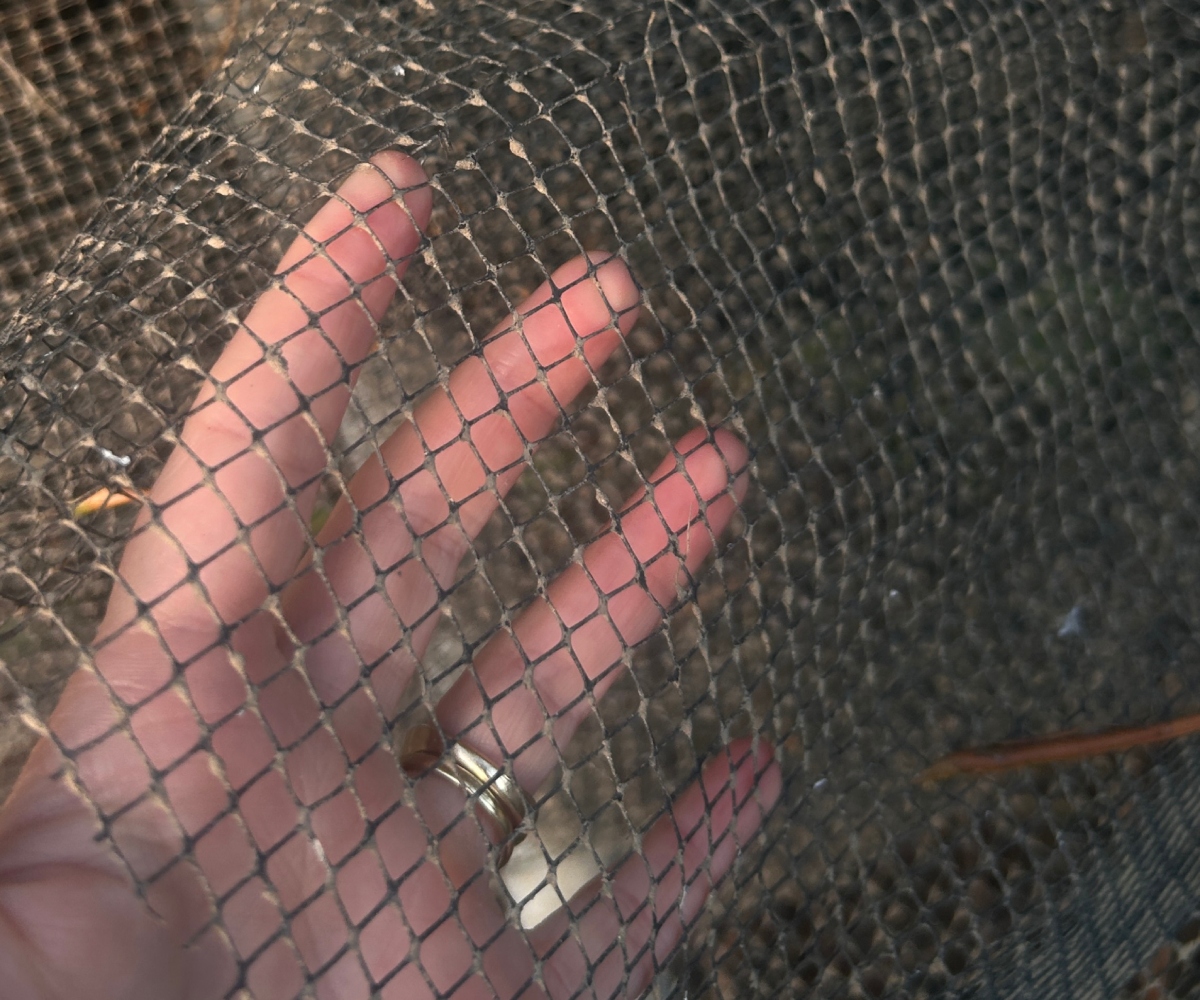
The oils emerging from these producers share a character that is their own. Balanced and not aggressive. Complex, green and herbal, with a freshness tied to the island’s coastal air and ancient soils, and a peppery finish that signals high polyphenol content which is what makes the wider picture so frustrating. Corfu is producing some of the most exciting extra virgin olive oil in Greece, and yet sit down for lunch at many of the island’s restaurants and you would never know it. At one really beautiful hotel, I was given a small clear plastic bottle of oil at the table. I almost fell off my chair. This hotel had a curated wine list and I was given a plastic bottle of oil! As my daughter would say, “that is diabolical“. Great Corfiot extra virgin olive oil should be flowing through the streets. It should be on every table, in every kitchen, celebrated the way wine is. The producers are doing their part. The rest of the island has some catching up to do. There is still something so exciting about what is happening in Corfu’s groves, and I am fully invested in it. I love this place and I love the people. I am still seeing lots of those black mats on the ground, waiting to catch fallen olives, and it breaks my heart. BUT baby steps.
The trees have not changed. The hillsides remain steep and difficult to navigate. The landscape is one of the most beautiful and most demanding in the Mediterranean. Nothing about the fundamental reality of growing olives here has been made easier. The producers have changed and are actively trying and succeeding at improving the quality of their EVOO and as much as I love extra virgin olive oil, sometimes the things you have to work hardest for turn out to be the best.