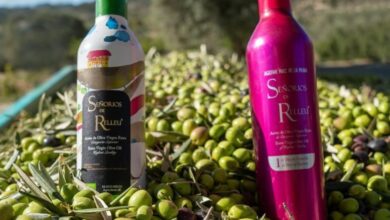
When shopping for extra virgin olive oil, most people grab a bottle based on price or brand recognition. This guide explains what actually matters when selecting quality EVOO and how to avoid poor products.
What is extra virgin olive oil
Extra virgin olive oil (EVOO) is the highest classification of olive oil. It’s produced by mechanical extraction only (no chemicals or heat processing) at temperatures below 27°C (80°F). This cold-extraction method preserves the olive’s natural flavors, aromas, and nutrients.
To qualify as extra virgin, the oil must have:
- Acidity level below 0.8%
- No defects in taste or aroma
- Cold mechanical extraction only
- No chemical refinement
Any oil labeled extra virgin but failing these criteria is either mislabeled or has been fraudulently processed.
The acidity level: what it actually means
Acidity in olive oil measures free fatty acids, not how sour the oil tastes. It’s a direct indicator of how well the olives were handled and processed.
High acidity (above 0.8%) indicates:
- Olives were damaged during harvest or storage
- Olives sat too long before processing
- Fermentation began in the fruit
- Extraction temperature was too high
- The oil has degraded over time
Low acidity (below 0.8%) indicates careful harvesting, quick processing, temperature control, and proper storage. It’s a reliable marker of quality and freshness.
Check the label for acidity percentage. Legitimate EVOO always shows this number. If the label doesn’t state acidity, it’s not genuine extra virgin oil.
Harvest date matters more than expiration date
Olive oil quality declines from the moment it’s produced. A harvest date tells you how fresh the oil actually is. An expiration date often means nothing because olive oil is frequently produced years before sale.
Look for the harvest date on the label. Quality EVOO should have been produced within 18 months of purchase. Oil older than this has already lost significant flavor compounds and antioxidants.
If no harvest date is listed, the producer probably isn’t transparent about freshness. This is a red flag.
The best oil is the most recently harvested. Early harvest oils (September-October in Northern Hemisphere) are fresher than late harvest oils available later in the season.
Protected Designation of Origin (PDO) and Protected Geographical Indication (PGI)
PDO and PGI certifications guarantee the oil comes from a specific region and meets that region’s quality standards.
PDO means the olives were grown, harvested, and processed in that region. PGI means at least one production step occurred in that region.
Major quality regions:
Spain (Jaén, Córdoba, Granada): Produces 50% of world’s olive oil. Jaén alone produces oils ranging from robust and herbaceous to complex and balanced.
Italy (Tuscany, Umbria, Puglia): Known for refined, elegant oils with herbaceous notes and balanced flavors.
Greece: Produces distinct oils with strong herbaceous and peppery characteristics.
PDO/PGI certification doesn’t guarantee the best oil, but it ensures origin authenticity and adherence to regional quality standards. Many excellent oils come from unregulated regions, but PDO provides a safety net for consistency.
Understanding olive varieties and their characteristics
Different olive varieties produce different flavor profiles. Knowing the variety helps predict what you’ll taste.
Picual (Spain): Robust, herbaceous, peppery. Notes of grass, green tomato. High polyphenol content (antioxidants). Best for high-heat cooking. Not for those preferring mild flavors.
Arbequina (Spain, Argentina, California): Mild, buttery, smooth. Notes of almond and hazelnut. Low polyphenol content. Best for delicate dishes and finishing. Good for beginners.
Hojiblanca (Spain): Balanced between robust and mild. Herbaceous with moderate peppery sensation. Versatile for cooking and finishing dishes.
Koroneiki (Greece): Complex, herbaceous. Notes of grass, green apple, peppery finish. High polyphenol content. Excellent for finishing dishes and tasting on its own.
Frantoio (Italy): Herbaceous, peppery, elegant. Balanced profile. Works for cooking and finishing. Different profiles depending on harvest time (early harvest vs late harvest).
Check the label for variety. Single-variety oils reveal the producer’s focus. Blended oils combine different varieties for specific flavor profiles or to enhance polyphenol content.
Bottle color and storage indicators
The bottle’s color directly affects oil quality. Light (both sunlight and regular light) degrades olive oil by breaking down flavor compounds and antioxidants.
Dark green or brown glass: Best. Protects oil from light degradation.
Clear glass: Poor. Oil has been exposed to light and is already degrading.
Plastic bottles: Worst. Plastic is permeable to light and oxygen. Oil inside is oxidizing.
If you see a bottle in clear glass sitting in a sunny store window, the oil inside is already compromised. Avoid it regardless of other quality indicators.
Canned olive oil is excellent because metal provides complete light protection.
What to check on the label
Front label must state:
- “Extra Virgin Olive Oil” or “Aceite de Oliva Virgen Extra”
- PDO or PGI certification (if applicable)
- Harvest date or vintage year
Back label must state:
- Acidity percentage (≤0.8%)
- Country and region of origin
- Olive variety (sometimes)
- Processing method (cold-pressed or first cold-extracted)
- Peroxide index (ideal, though not always listed)
If the label lacks acidity information or doesn’t clearly state “extra virgin,” it’s not genuine EVOO. Legitimate producers are transparent about these details.
Early harvest vs late harvest oils
Harvest time directly determines the oil’s characteristics.
Early harvest (September-October): Oil is green, herbaceous, peppery. Strong flavors. Higher polyphenol content. More expensive. Fresher and more nutrient-dense.
Late harvest (November-December): Oil is golden, milder, buttery. Subtle flavors. Lower polyphenol content. More affordable. Smooth and approachable.
Early harvest doesn’t mean better. It means different. Your preference determines which suits you. Early harvest appeals to those seeking complexity and antioxidants. Late harvest appeals to those preferring mild, subtle flavors.
Check the bottle for harvest date to know what you’re buying.
How to spot poor quality or fraudulent oil
Red flags indicating poor quality:
- No acidity information on label
- Price significantly lower than competitors (often indicates dilution or poor olives)
- Clear bottle exposed to light in store
- No harvest date listed
- Label doesn’t say “extra virgin” (it says just “olive oil” or “pure olive oil”)
- Smell is rancid, musty, or moldy (indicates oxidation or fermentation)
- Taste is flat or unpleasant (indicates poor storage or old oil)
Common fraud methods:
Blending lower-grade oils with extra virgin and labeling as extra virgin. Check acidity and harvest date to verify authenticity.
Selling refined (processed) oil as extra virgin. Refined oil has been chemically treated and heat-processed, removing most flavor and nutrients. Legitimate extra virgin oil has no chemical processing.
Using old oil but falsifying harvest dates. Buy from reputable producers only.
Mixing seed oils with olive oil and selling as pure olive oil. This is detectable through laboratory analysis, but check the label for single-origin claims.
Price expectations for genuine EVOO
Quality extra virgin olive oil ranges from €15-40 per liter ($16-45 USD) depending on region and producer. Exceptional oils from small producers cost €30-60 per liter.
Price indicators:
- Under €10 per liter: Likely not genuine extra virgin or very poor quality
- €10-15: Budget extra virgin, usually acceptable quality but may be older or less flavorful
- €15-25: Good quality range. Reliable extra virgin from reputable producers
- €25-40: Premium quality. Early harvest or single-estate oils with superior flavor
- Above €40: Specialty oils. Either very early harvest, rare variety, or very small production
Price alone doesn’t guarantee quality, but extremely cheap oil is almost certainly not what it claims to be.
Where to buy quality olive oil
Specialty food shops: Staff usually understand the products and can answer questions about origin, processing, and flavor profiles.
Direct from producers: Buying online from producers eliminates middlemen. You get fresher oil at better prices. Producers often provide detailed information about their methods.
Farmers markets: Local producers can answer detailed questions and explain their practices directly.
High-end supermarkets: Usually stock quality brands but may have less education about the products.
Avoid: Buying from discount stores selling very cheap oil. Regular supermarkets may stock poor-quality oils. Online sellers without producer information.
How to evaluate oil before buying
If possible, smell and taste the oil before purchasing.
Smell test: Quality oil smells fresh. Green oils smell like grass, herbs, or leaves. Golden oils smell like ripe fruit or nuts. Avoid anything smelling rancid, musty, or unpleasant.
Taste test: Put a small amount in your mouth. Quality oil has distinct flavor: herbaceous, fruity, peppery, or nutty depending on variety. Avoid anything tasting flat, musty, or off.
Don’t judge by color alone. Color depends on variety and harvest time, not quality. A golden oil can be excellent. A green oil can be mediocre.
Storage after purchase
How you store oil affects its longevity and quality.
Ideal storage:
- Cool location (13-20°C or 55-68°F)
- Dark place away from light
- Away from heat sources (never near stove)
- In dark glass bottle, not plastic
- Sealed tightly when not in use
A cool, dark pantry is ideal. Under the kitchen sink is poor (pipes produce heat). Windowsills are terrible (light exposure). Never store in clear bottles in sunlight.
Well-stored oil remains quality for up to 18 months. Poorly stored oil degrades within weeks.
Summary: key factors when choosing EVOO
1. Verify it’s actually extra virgin: Check label says “extra virgin” and acidity is below 0.8%.
2. Check harvest date: Buy oil from the most recent harvest available. Avoid oil older than 18 months.
3. Look for PDO/PGI: Certification ensures origin authenticity and regional quality standards.
4. Identify the variety: Know whether you prefer robust oils like Picual or mild oils like Arbequina.
5. Check bottle color: Dark glass indicates proper light protection. Clear glass indicates degradation.
6. Examine for freshness indicators: Cold-pressed, first extraction, early harvest all indicate quality and care.
7. Use your senses if possible: Smell and taste before buying. Quality oil has distinct, pleasant aroma and flavor.
8. Price reasonably: Quality EVOO ranges €15-40 per liter. Significantly cheaper prices indicate problems.
9. Buy from trustworthy sources: Reputable producers, specialty shops, or direct from producers are safest.
10. Store properly at home: Cool, dark location preserves quality. Sunlight and heat destroy it.
Conclusion
Choosing quality extra virgin olive oil requires checking specific details: acidity level, harvest date, certification, variety, bottle color, and producer transparency. Use these criteria systematically when shopping and you’ll reliably select superior oil rather than poor imitations. The difference in flavor, nutrition, and cooking performance between genuine quality EVOO and low-grade oil is dramatic and worth the attention to these details.