Olive oil was first pressed in Russia in 1826 for the imperial court, in the south of Crimea on the Black Sea coast. But after the revolution and the overthrow of the tsarist regime, production was practically abandoned. This abandonment lasted almost 200 years.
2025. I pick up the phone and hear: “Hello! We produce olive oil in the south of Russia, in Crimea, and we’d like you to try it.”
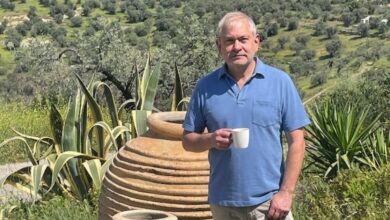
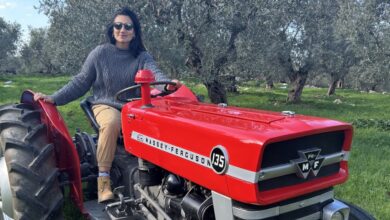
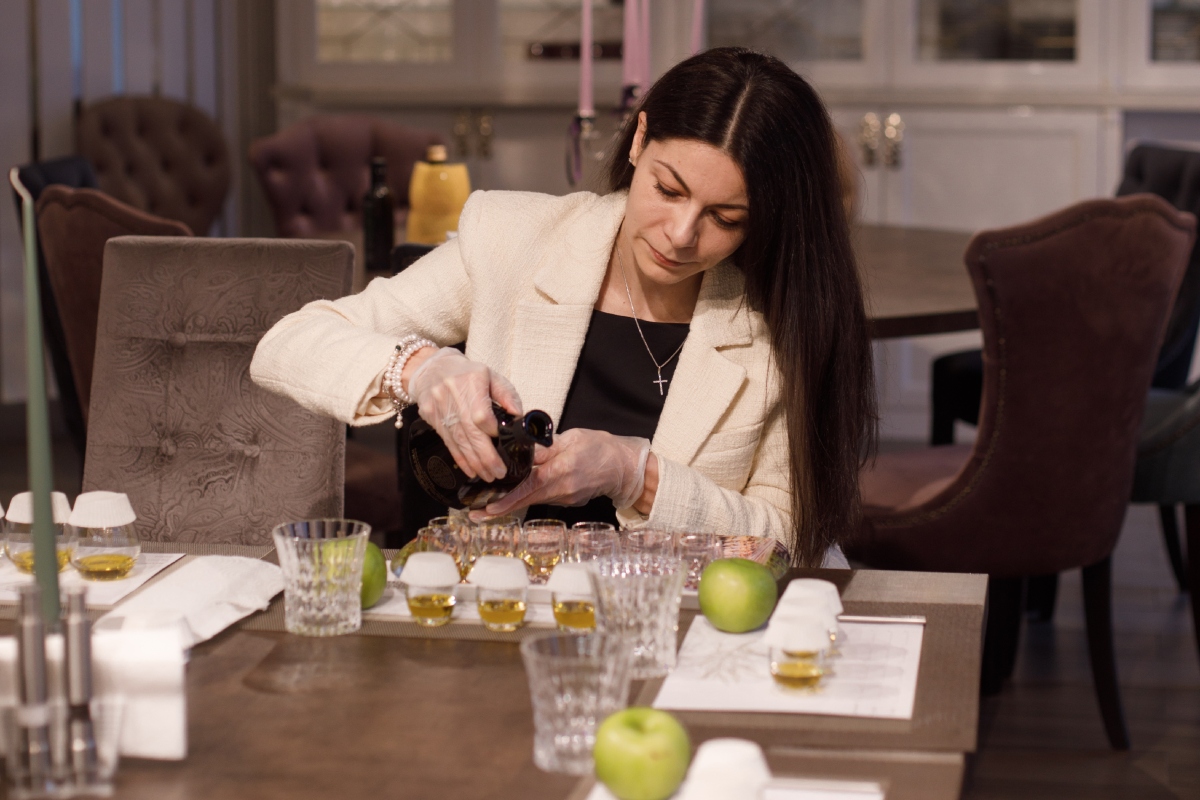
Now, I believe, it’s time to introduce myself. My name is Parfena. I am Greek, but I was born in Russia and currently live in Moscow. To date, I am the only practicing olive oil sommelier in our country certified by the International Olive Oil Network.
Prior to answering that call, I was working on raising awareness: I wrote articles about olive oil for newspapers and magazines, conducted tastings at culinary salons and restaurants, cooperated with chefs — both established and aspiring — and consulted suppliers. In other words, I did my best to spread the culture of olive oil. At the same time, during tastings, I introduced people to rare samples and world champions that aren’t even sold in Russia. So, the phone call was providential. “Send it over. I’ll be happy to try some!” was my answer.
To be honest, I was quite skeptical. I knew nothing about the farm that was about to send me the evoo. They had been in Russian winemaking for years and made very good wine. True, their Mediterranean climate zone is favourable for winemaking. True, in Mediterranean countries, olives frequently grow alongside vineyards. But for these countries, these are centuries-old traditions — while for us… who would dare to start making olive oil without any experience?
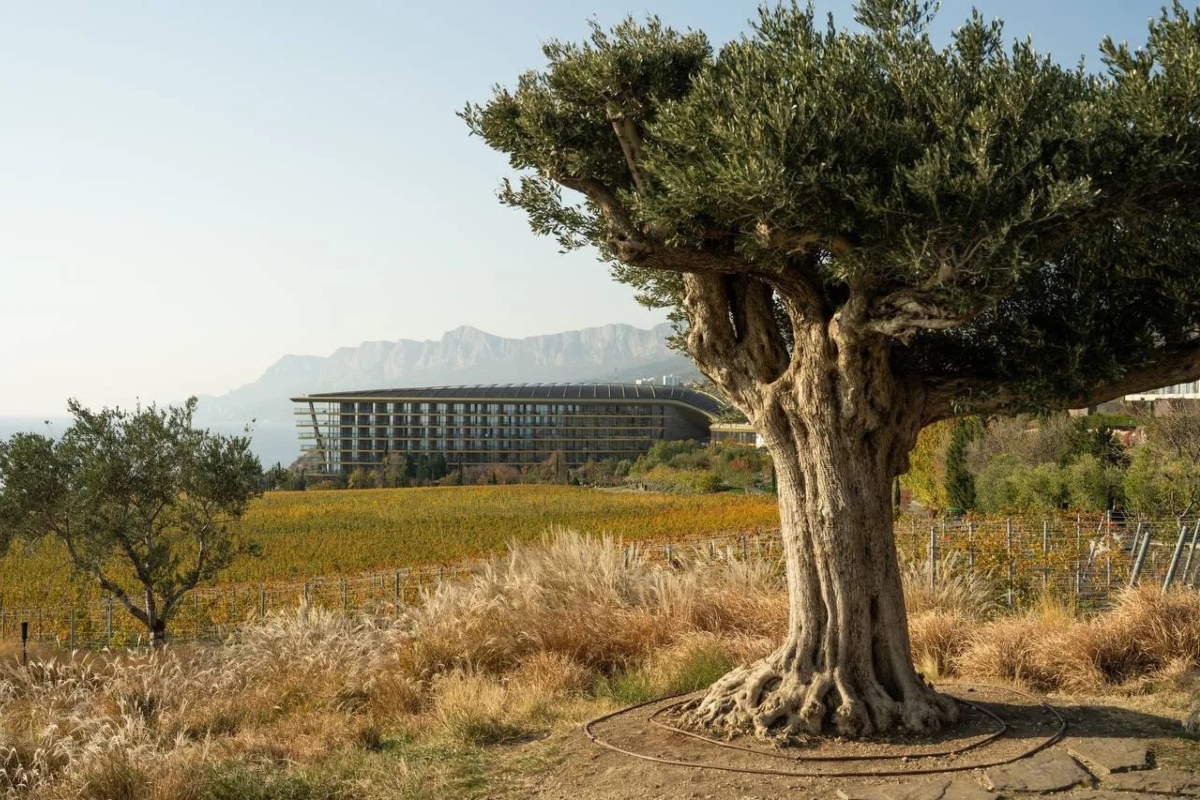
While the evoo was being transported to Moscow — a distance of 1,800 kilometers — I had time to look into the matter of olive trees in the south of the country. It turned out that besides the “Wine Park” farm, located on the territory of the “Mriya” resort, there is another winemaking farm which also produces extra virgin olive oil: “Chateau Ai Danil”. In addition, the Nikitsky Botanical Garden and the Crimean Federal University also have experience in olive oil production. All of them are located on the Crimean peninsula. Moreover, olive trees turned out to be growing in some other southern republics, such as Dagestan and the Krasnodar Territory.
So, while I was tasting Italian, Greek, and Spanish samples, farmers in the south of Russia were diligently working on olive oil production. But I digressed. Let’s return to the samples I received.
One of them was Arbequina — a famous variety, known to every olive oil sommelier. In this case, the aroma had no defects. It was fruity, but somehow different and previously unknown to me. Only later did I find out that the loquat smell combined with ripe banana peel was common to other Crimean farms. That is how I came to the conclusion that the aroma was specific to the local terroir — the unique combination of soil, climate, and tradition that shapes the character of the olive oil. With mild bitterness and the slightest spiciness, it was clear that the evoo was made from ripe olives. What struck me most, however, was that it had no defects!
The second sample was pressed from a 1,300-year-old olive tree (according to the label). It had a slight defect in the aroma, which indicated that the olives had been stored in a refrigerator for some time rather than pressed immediately — likely due to inexperience. I was curious: where had they found an olive tree that was 1,300 years old?
The story goes that the design of the “Mriya” resort grounds was entrusted to the legendary Japanese architect and keeper of the imperial gardens of Kyoto, Shiro Nakane. He decided to plant an alley of olive trees, dividing the vineyard territory in half. According to his plan, an ancient olive tree was supposed to grow in the middle of that alley. Many years ago the tree was brought from Israel. It was a difficult two-week journey, but the olive tree took root and has been bearing fruit ever since.
“Such a shame that trees can’t talk,” I thought to myself when I happened to be near that ancient olive tree. Imagine the amount of warmth, strength, and wisdom this incredible tree holds!
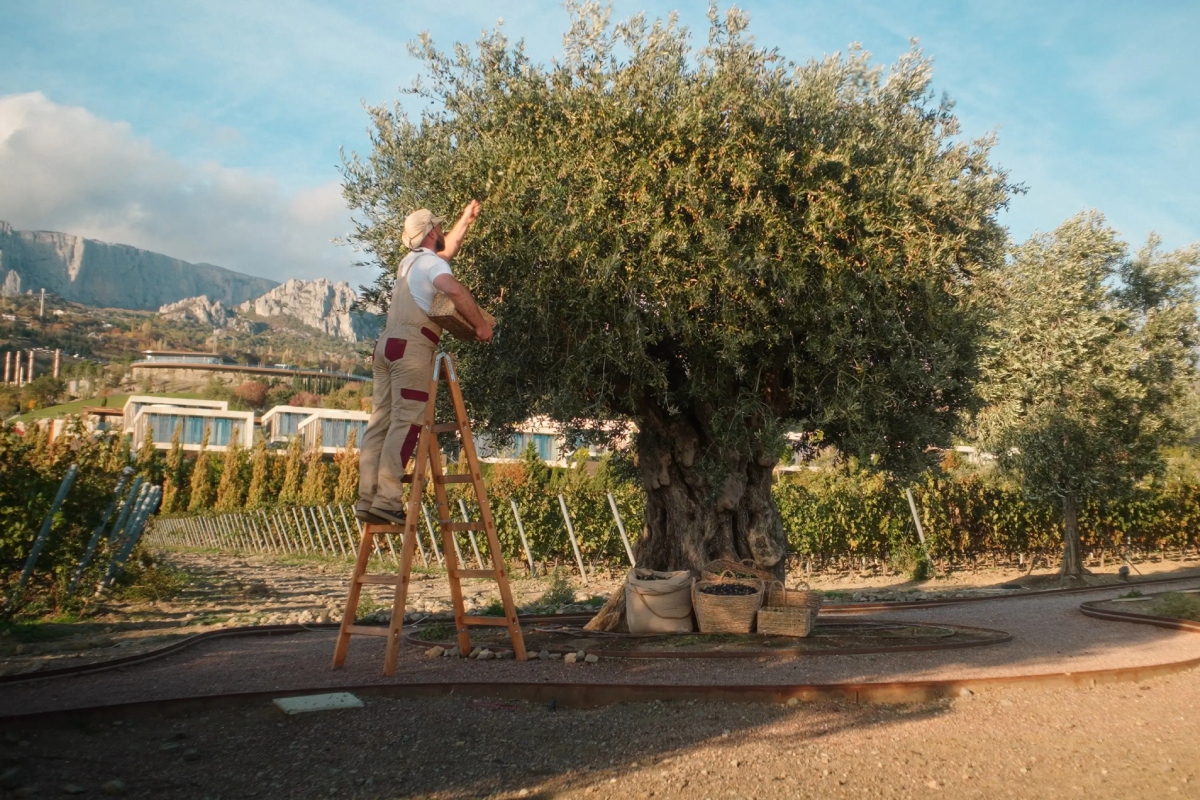
I find it interesting that almost all the Crimean farms harvest their crops entirely by hand. No special equipment — hands only. In all honesty, “Mriya” is an incredibly beautiful place! This is my second time here, and I never cease to admire the hospitality of the local people and the beauty of nature.
It would be an understatement to say that I am a happy person. In our large Greek family, there has always been a tradition of tasting extra virgin olive oil on New Year’s Eve. It was always a long-awaited package from our relatives in Greece. But I could never have imagined that I would be tasting professionally, having swapped my career as an economist for that of an olive oil sommelier. Moreover, I could not even dream that one day I would be tasting not only the best evoo samples from around the world, but evoo produced on Russian soil too.
Life is full of surprises, and I wish them nothing but pleasant for our readers. After all, we all know how hard it is to take care of olive trees — protecting them from droughts, strong winds, heavy rains, and insects. But more than that, I remind myself that olives do not belong to us. We merely tend to them, so that we may pass them on to the next generation. With respect. With love.
While I wrote this article, Russian evoo won silver on the Korea International Olive Oil Competition. Proud of guys! The first competition and the first prize.