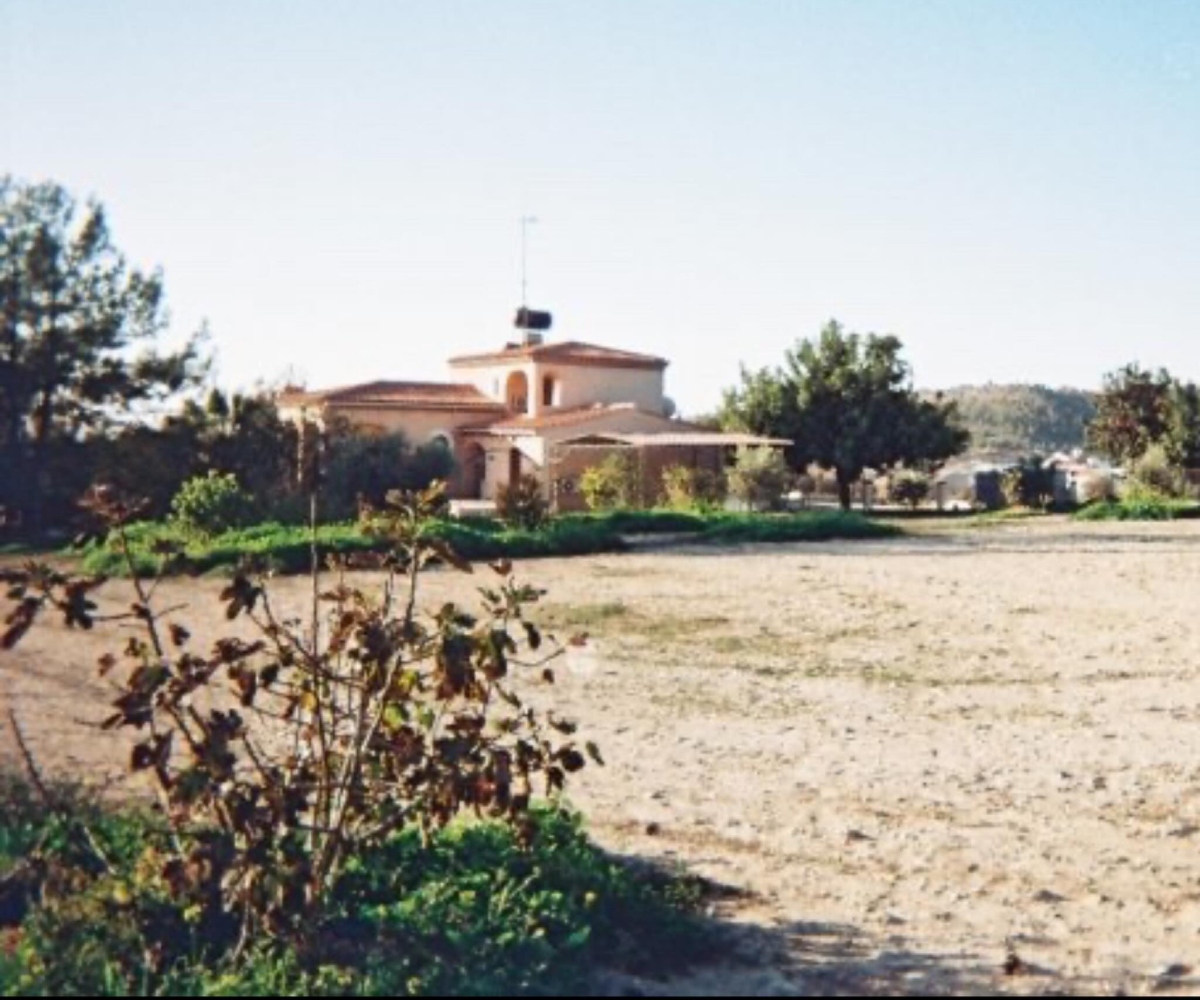
In 2000, a Greek Cypriot family living in London bought a house in a village below Stavrovouni, in Cyprus. It was a summer house, the kind that fills with voices in June and empties by October. That same year, the father planted the first olive trees on the land around it.
Then the house was rented out for close to ten years. Other families made their summers in those rooms while this one made its summers elsewhere.
The grove was a different matter. Every harvest, the father came back.
The man who kept the trees
Through all those years there was a man from the village who tended the trees the whole year round. Not for a season, and not as a favour that could be forgotten by spring. He kept them, in the way you keep something that has been handed to you and is expected back in good condition.
When the olives were ready, the father flew in to press them. The family took its supply for the year. The rest went to relatives and friends, which is how olive oil has always moved in Cypriot houses: as a fact of the relationship, not a gift with a price on it.
It is worth sitting with that arrangement, because it explains something about Manayi that no product description can. For close to a decade, the trees were producing oil for a family that was not living there. Someone else’s hands were pruning them. Someone else’s children were spending the summer in the house. And the oil kept arriving anyway.
Papa John, and a boyhood on a farm
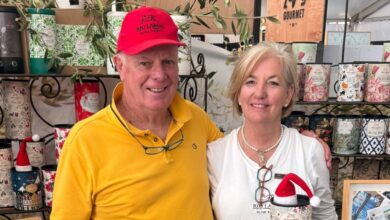
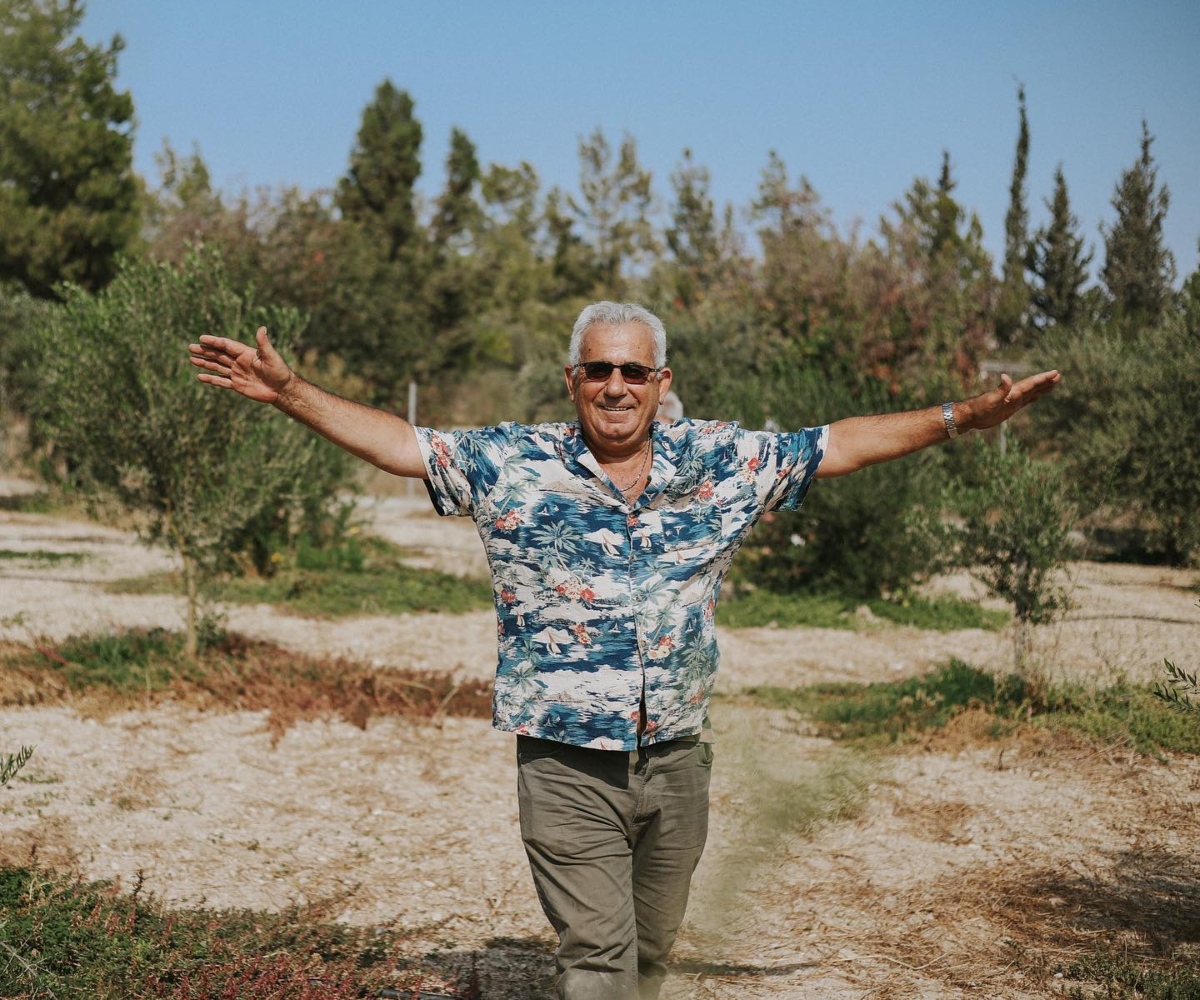
The father, called Papa John in the family, grew up on a farm. Planting those first trees was a return rather than a plan: to the land, to farming habits learned as a boy, to the generations who had done the same work before him.
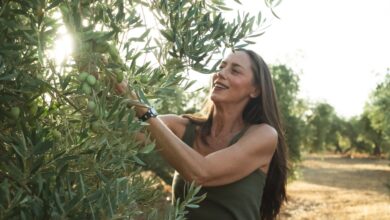
By 2005 the harvest had become a tradition. Friends came to pick by hand. The olives were pressed the traditional way. Nobody was building anything. They were making the oil the household would cook with for the next twelve months, and passing along what was left.
Twenty-one years of harvests happened before anyone printed a label.
A contact list, and 200 bottles
The idea arrived sideways. Artemis, one of the sons, worked as a touring DJ, which meant a phone full of people in hospitality. In 2020 he started giving the family oil to friends and peers in that world. Not as a pitch. As the thing you bring when you visit someone’s kitchen.
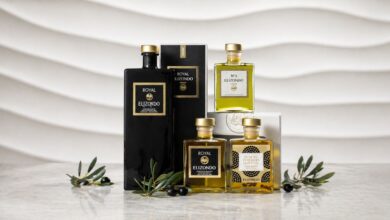
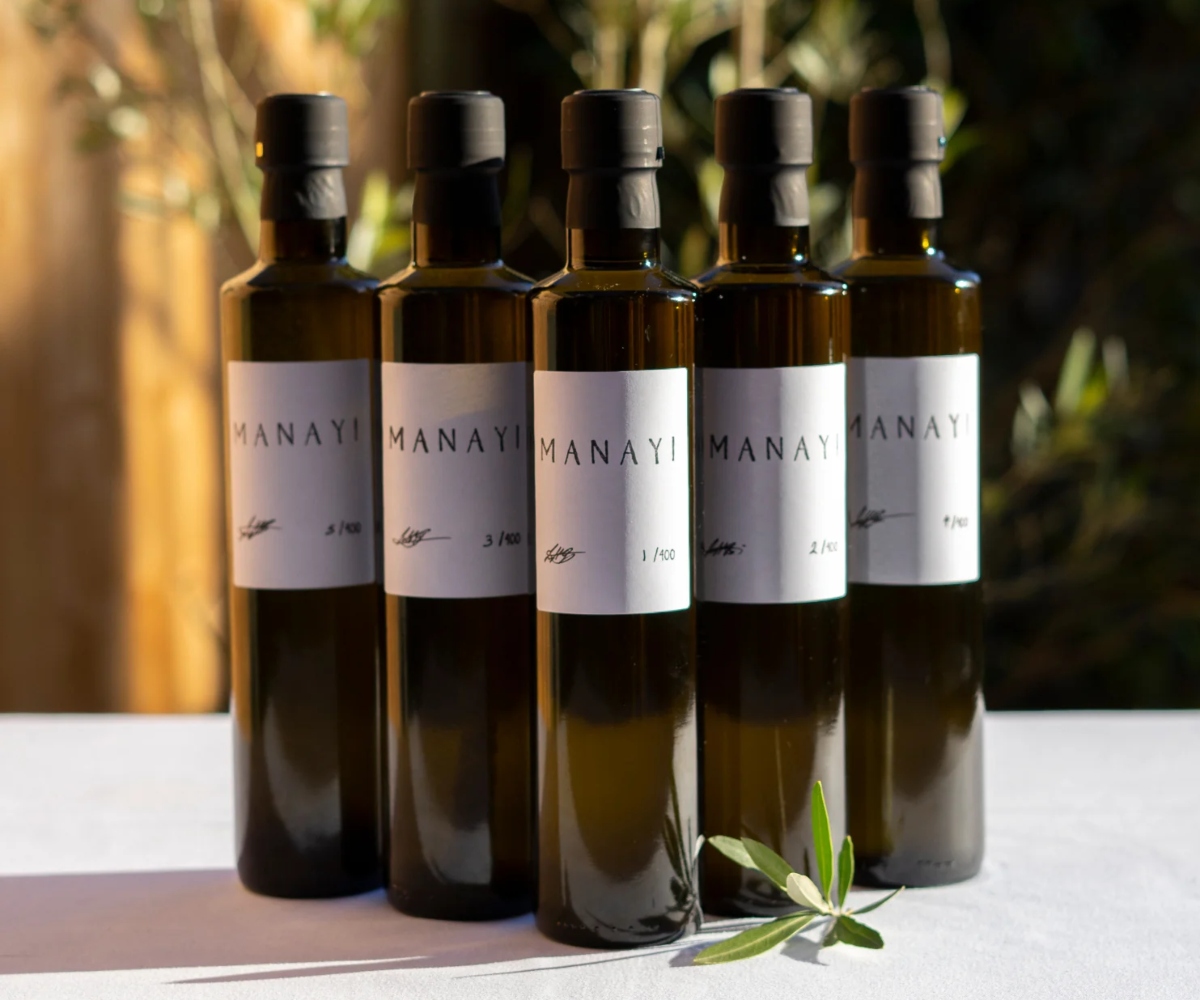
Enough of them asked where it came from that the family answered properly. The first bottle was, in their own words, a bootleg effort: the name, a batch number, and Papa John’s signature written across it. Two hundred bottles. They sold within months.
The same year, Papa John and his wife retired to Cyprus. To that house, to those trees. Then the pattern reversed. George came back with his family. The other brother with his. Artemis more and more often as the years went on.
Their own line for it is hard to improve on: some things you do not leave behind, you just take a longer route back to them.
The son who does the pruning
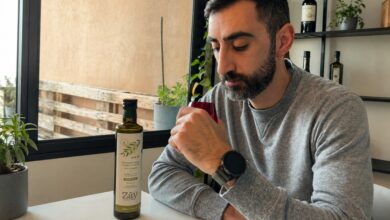
Artemis is the one moving between London and the grove. He is back and forth through the year, pruning when the trees need it, and has led the last three or four harvests himself. He describes having felt every ounce of what goes into a single bottle long before it reaches a shelf.
That is also why his sharpest public statement is about packaging. Bright plastic squeezy bottles photograph well and pour easily, and he understands the appeal. His objection is that after a year of work, the pruning, the waiting, the harvest, the pressing, pouring that oil into a container that lets light undo it is something he says he will never make peace with. When everyone copies the same trick, you stop protecting the product and start decorating it.
His brother George reads the science. Demetra, the third partner, does the teaching, showing people what a good extra virgin olive oil is meant to taste like. A family that spent twenty years making oil on instinct now has someone assigned to each part of the argument.
The chef who tasted it first
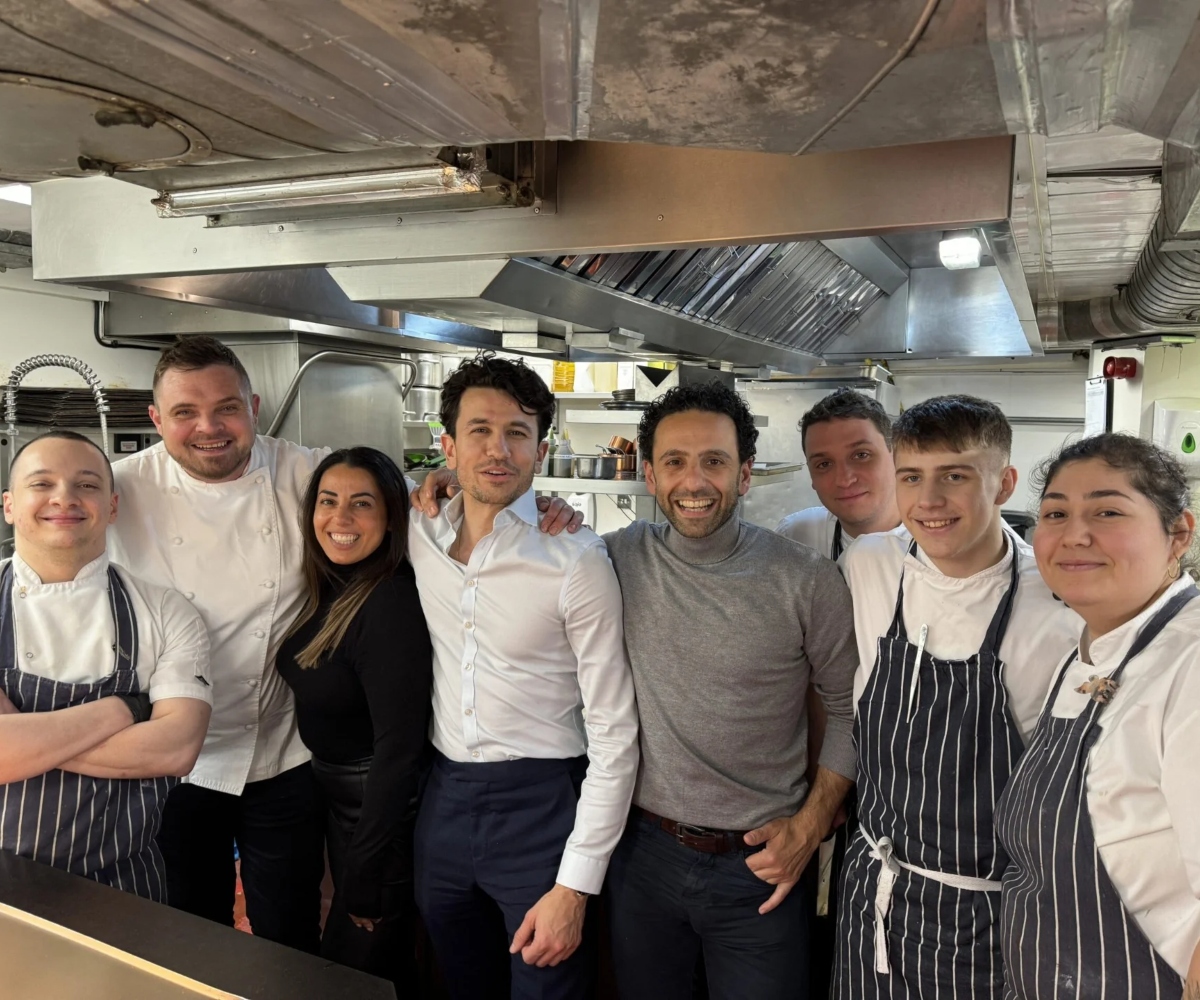
In 2022 the Michelin-starred chef Asimakis Chaniotis tried the oil, and Pied à Terre became Manayi’s first restaurant client. That single account changed the nature of what the family was doing. A restaurant does not buy a bottle out of affection for your father. It buys because the oil performs, every service, without variation.
The recipes they publish still trace the double life. There is a scallop crudo built around the black olive paste, developed for a chef’s kitchen. And there is a Greek salad that comes, without apology, straight from Mama’s kitchen at the Village House.
Saturday mornings behind a folding table
For a company selling into Michelin kitchens, Manayi spends a striking amount of time at markets. Brook Green every Saturday. Ruislip Manor Farm on the first Sunday of the month. Highbury, Highgate, Winchmore Hill.
Their reason is plain: the markets let them talk to the person who will actually eat the oil, hand over a sample, and answer questions about how it was made. Among the reviews they have collected is a customer who tasted it at a local food fair and went looking for it afterwards, and another who names Artemis and George and says the two of them are the reason she keeps buying.
It is the same exchange Papa John was running twenty years ago when he handed bottles to relatives. There is just a stall and a card reader now.
Bambos, and the taste of recognition
The Kypriako Edition takes its name from Kypros, which is what Cyprus has always been called by the people who belong to it. The oil is pressed by Bambos, who has spent his life among these trees. His grove sits in the mountain air not far from the family’s own. The mill is his.
The olives are Ladoelia, the native Cypriot variety, small-fruited and ancient, the same one Papa John has tended for decades.
The family describes the first tasting as recognition rather than discovery. They knew before they could say why. It tasted, they say, like the oil that had always been waiting for them, the one that never needed them to come back because it had never gone anywhere.
That is the sentence that holds the whole thing together. They did not choose Bambos from a specification sheet. They chose him because his oil tasted like the one they grew up on.
Easter, and the year ahead
There is one more thing Artemis writes about that has nothing to do with selling anything. Easter, for him, is the clearest signal of the season ahead. It is the point where winter loosens and the land begins to move again, and what the trees look like then is the earliest reading you get on the harvest to come. Buds become flowers. Flowers become olives. In a recent spring he reported the trees budding well, resilient as ever, and added that they might need a few extra hands come harvest.
That is the whole business in one line. A family with a house in a village, a grove they never really left, and an open call for help when the fruit is ready to come down.
Papa John is still there, in the house, among the trees he planted, and his sons keep flying out to help him bring the fruit down.