There are people who spend their lives chasing something bigger than themselves. And then there are those who choose something small and, somehow, turn it into something immense. Antonio Almagro Expósito belongs to the second kind.
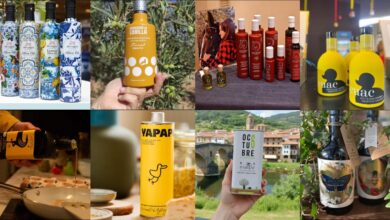
What began as a simple curiosity, picking up miniature bottles at olive oil fairs, slowly turned into a lifelong pursuit. Not driven by recognition or ambition, but by a quiet instinct to keep what others might forget. Over time, that instinct grew into something difficult to measure. Today, his collection exceeds 22,000 miniature bottles and cans of olive oil, each one different, each one carrying a place, a story, a moment that once existed somewhere in the world.
At first glance, it may look like a collection defined by numbers. But the closer you get, the more it reveals something else. Each piece holds a fragment of identity. A label designed with intention. A format created for a specific purpose. A reflection of how a brand once chose to present itself. Some of these bottles are nearly two centuries old. Others have traveled across continents before finding their place here. Many no longer exist anywhere else.
The path to building this has not been simple. It is made of years on the road, countless calls and messages, exchanges with other collectors, and a steady commitment that asked for time, patience, and sacrifice. There were no guarantees, only the belief that it was worth continuing. And somewhere along the way, others began to see it too. Friends, collectors, companies, and strangers contributed pieces, not just to help a collection grow, but because they understood what it represented.
That is when something personal begins to transform into something shared.
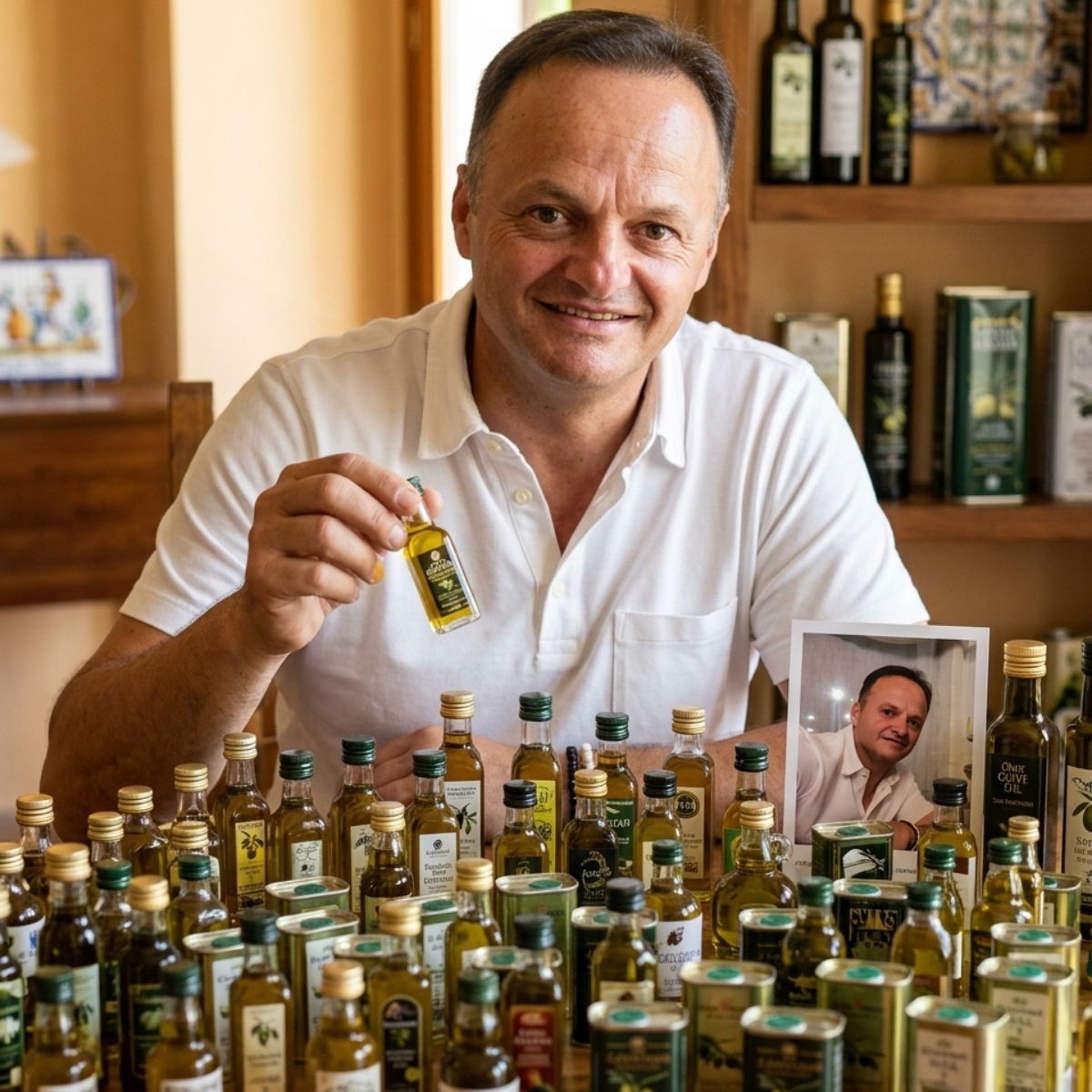
Today, with the support of Picualia, this life’s work is taking on a new form. In Bailén, a museum will open its doors to house the entire collection, allowing it to be seen, understood, and experienced. Not as a private archive, but as a space where anyone can walk through the evolution of olive oil, not through technical explanations, but through the objects that carried it across time.
Because olive oil is not only produced. It is also expressed. In the way it is presented, in the details that surround it, in the decisions behind every bottle. What Antonio has preserved is not just packaging, but a visual and cultural memory of an entire industry.
It is easy to think that significance needs scale. But here, it lives in the smallest forms. Objects that fit in the palm of a hand, yet hold decades, sometimes centuries, of history. Pieces that were never meant to last this long, but did, because someone chose to keep them.
There is something deeply human in that choice. In dedicating a life to preserving what others overlook. In understanding that even the smallest container can carry meaning.
Between the tree and the table, there are many stories. Antonio chose not to let them disappear.