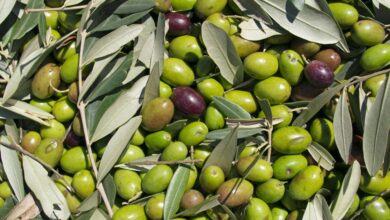
Virgin and extra virgin olive oil are both unrefined, made only by pressing olives, but extra virgin is the higher grade. The difference lies in quality: extra virgin must have acidity below 0.8 percent and no taste defects, while virgin oil allows up to 2 percent acidity and minor flaws. Both are natural and healthy, but extra virgin tastes cleaner and carries more antioxidants, which is why it costs more and is far more common on shelves.
These two labels look almost identical, and the gap between them is one of degree, not of method.
What they share
Both are virgin oils, meaning they come from pressing olives without heat or chemicals, keeping their natural flavor and nutrients. Neither is refined, so both sit above pure and light grades, as our guide on what is refined olive oil explains. In both cases the olives are crushed into a paste, the paste is mixed, and the oil is separated out by pressure or centrifuge, with nothing added along the way. That shared mechanical process keeps the fruit’s aroma and polyphenols in the bottle, and it is why both grades can be called cold extracted when the mill keeps temperatures low.
Where they differ
Extra virgin must pass stricter tests: acidity under 0.8 percent and a tasting panel that finds no defects at all. Virgin oil allows acidity up to 2 percent and small flaws in taste or aroma, the kind a trained taster notices before most shoppers would. This is purely about the quality of the fruit and the speed of handling, as our guide on olive oil acidity describes. Bruised olives, slow milling or a touch of fermentation push an oil down from extra virgin to virgin. The International Olive Council defines both grades and runs the official chemical and sensory criteria that decide which word a producer may print.
Taste and quality
Extra virgin tastes fresher and more vivid, often with pepper, grass and ripe fruit, while virgin oil is a step milder and may show a slight flatness or a faint off note. Both are good, but extra virgin is the benchmark, which we cover in what is extra virgin olive oil. The peppery catch at the back of the throat tends to be stronger in extra virgin, a direct clue to its higher antioxidant content.
Why the price gap
Extra virgin requires healthier fruit, faster handling and careful pressing, so it costs more to produce. Plain virgin olive oil is less common in shops, which is why most quality buyers simply look for extra virgin, as our guide on cold pressed olive oil notes. Producers who harvest early, mill within hours and keep their oil cool earn the extra virgin grade, and that extra work shows up in the price.
How to choose between them
For everyday cooking, and especially for finishing, dressings and dipping, extra virgin is the better pick, since taste and antioxidants both reward you. Virgin oil is a reasonable, slightly milder and usually cheaper option if you find it, and it works well in cooked dishes where the oil is not the star. Shoppers in North America can lean on the buyer guidance from the North American Olive Oil Association, which explains the grades in plain terms.
One more practical note: store whichever grade you buy the same way, cool, dark and tightly closed. Neither virgin nor extra virgin improves with age, and both lose their edge once heat, light or air gets to them. A fine extra virgin left open by a sunny window can fade to something duller than a well-kept virgin oil within months, so good storage protects the money you spent on the higher grade.
The takeaway
Virgin and extra virgin are both unrefined, but extra virgin has lower acidity and no defects, making it the higher grade. Choose extra virgin for the best taste and benefits, and know that virgin is a decent, slightly milder step down. For the whole ladder, see first cold pressed olive oil.